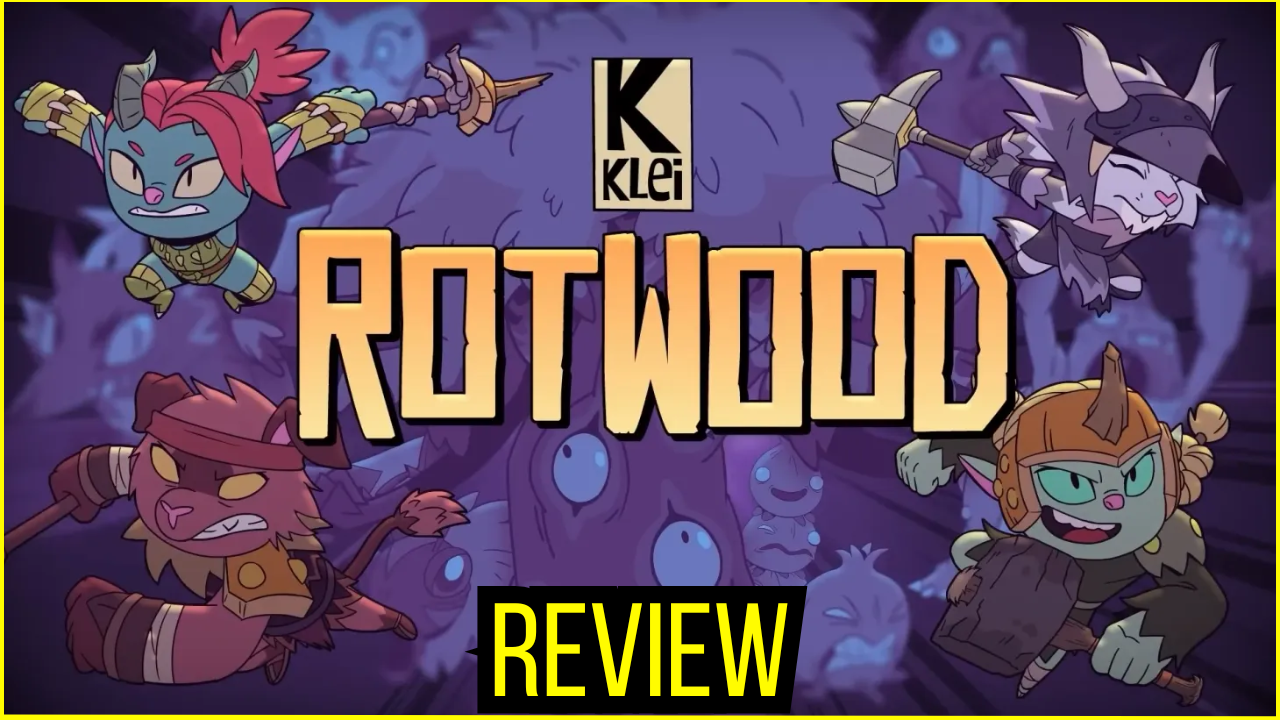
Rotwood

7
C-Tier
Genre:
Action, Action-Adventure, Beat Em Up, Roguelite
Platforms:
PC, Switch/Switch 2
Tier Score:
C-Tier
Developer:
Klei Entertainment
Rotwood Review – A Stylish Roguelite Brawler That Shines Brighter in Co-Op
Introduction
I went into Rotwood knowing almost nothing about it. Apparently the game had spent nearly two years in early access building a following among couch co-op fans, but it didn’t really hit my radar until recently.
What caught my attention was the genre mix.
I’m a self-admitted roguelike sicko, and after really enjoying games like Absolum last year, the idea of another roguelite beat ’em up sounded right up my alley. When I saw Rotwood’s level structure reminding me a bit of Cult of the Lamb—with branching rooms and power-ups between fights—I knew I had to give it a shot.
After spending time with it, Rotwood turned out to be a stylish and mechanically deep roguelite brawler that’s easy to enjoy—but one that doesn’t quite reach the heights of the genre’s best.
Narrative
The story in Rotwood exists mostly as a backdrop rather than a central focus.
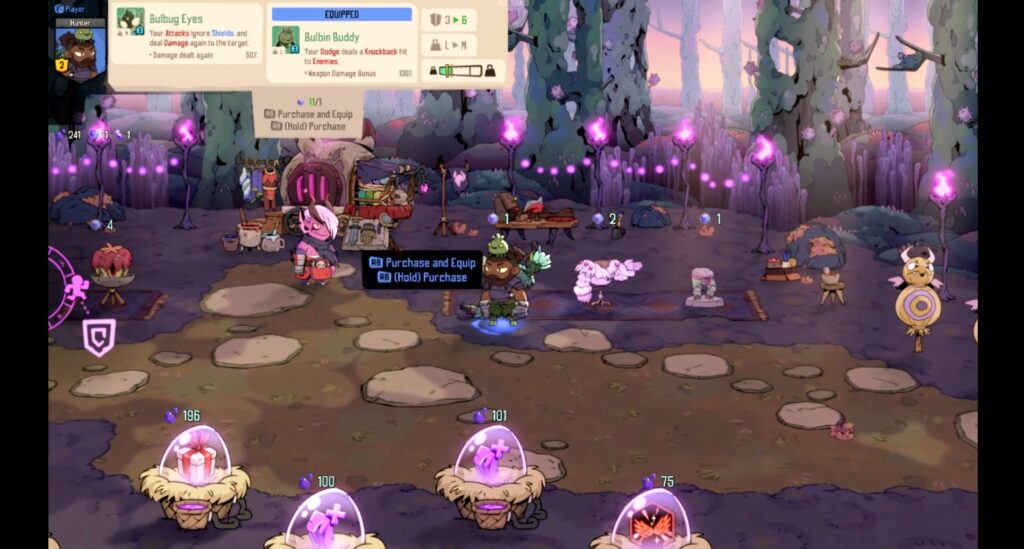
Players take on the role of hunters protecting their safe haven from creatures corrupted by mysterious forces spreading through a twisted forest known as the Rotwood. Each expedition sends you into these hostile regions where you battle monsters, gather resources, and return home stronger than before.
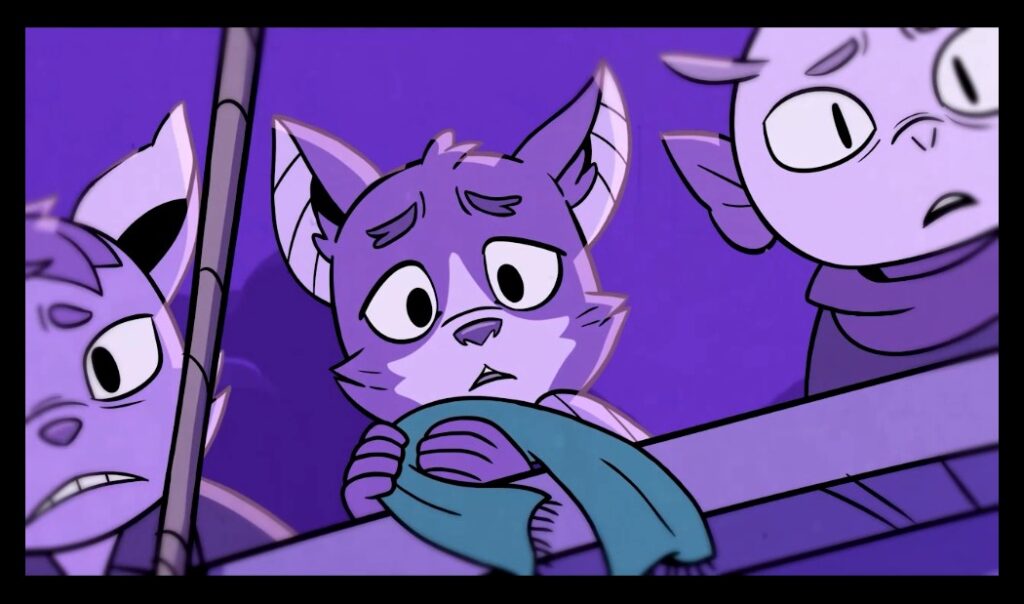
While the premise works well enough to justify the gameplay loop, the characters themselves never made much of an impression on me. Most NPCs feel more like vendors or service providers than memorable personalities.
They exist to sell gear, offer upgrades, or trigger events rather than to drive a compelling narrative forward. That’s not necessarily a dealbreaker for a roguelite—many games in the genre are light on story—but it does mean Rotwood never becomes emotionally engaging.
The narrative simply serves as a framework for the hunts rather than something you’ll feel deeply invested in.
Gameplay
Where Rotwood really shines is in its combat and progression systems.
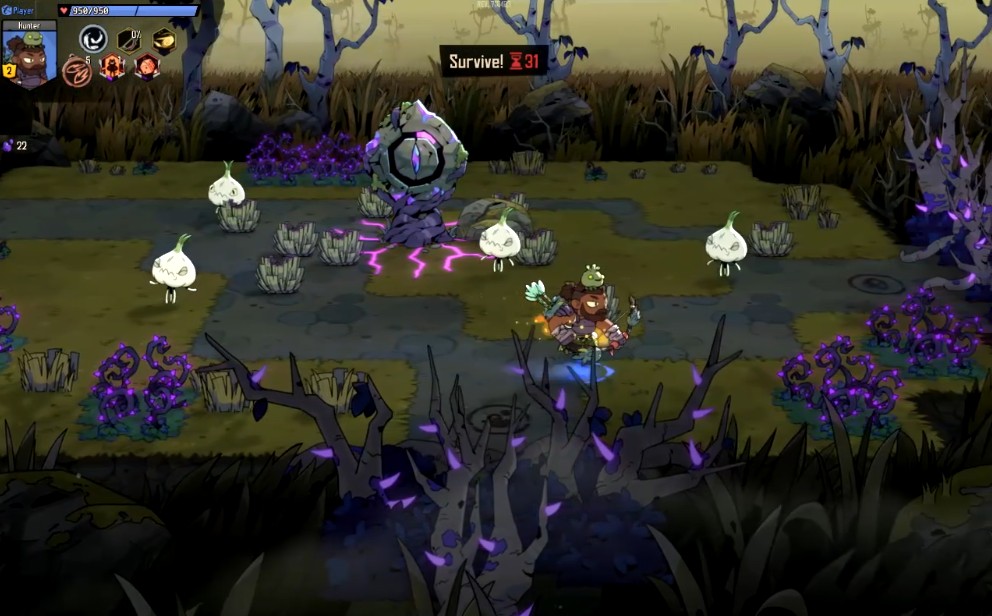
At its core, the game blends beat ’em up combat with roguelite structure. Each run sends you through branching rooms filled with enemies, NPC encounters, and power-ups. Clearing a room lets you choose between two paths, each offering different rewards like currency, upgrades, or new abilities.
If you’ve played games like Hades or Cult of the Lamb, the structure will feel instantly familiar.
Combat emphasizes timing, positioning, and weapon mastery rather than button-mashing. Every weapon type has its own playstyle:
- Hammer for heavy, slow-hitting attacks
- Bow and arrow for agile ranged combat
- Cannon for powerful but reload-dependent bursts
- Gloves for fast melee strikes
- Spear… which, frankly, I didn’t enjoy at all
Some weapons simply feel better designed than others. The spear in particular felt extremely unforgiving, requiring near-perfect positioning to land hits effectively.
That said, weapon variety overall is strong. As you progress, you can discover upgraded versions with unique modifiers—like a bow that allows you to teleport during heavy attacks or a hammer with powerful charge abilities.
Runs are also enhanced by power crystals, which grant temporary buffs during a run. These include perks like:
- Increased critical hit chances
- Bonus damage when health is low
- Healing when entering new rooms
- Environmental explosions when destroying objects
These buffs disappear after the run ends, encouraging experimentation and different builds each time.
Permanent progression comes through multiple currencies:
- Cornerstones for upgrading gear
- Gems for permanent upgrades
- Heart shards for improving core stats like health, speed, and healing
It’s a lot of systems layered on top of each other, but once you understand them, the game reveals a surprising amount of depth.
Another clever mechanic is the weight class system. Every piece of equipment has weight, which determines your class:
- Agile builds move faster but take more damage
- Heavy builds are slower but more durable
This system changes how combat feels and encourages experimentation with different builds.
One of my favorite design choices is that the environment damages both you and enemies. Traps, spikes, and explosive hazards can wipe out monsters just as easily as they can destroy you. Luring enemies into environmental dangers adds a satisfying layer of strategy.
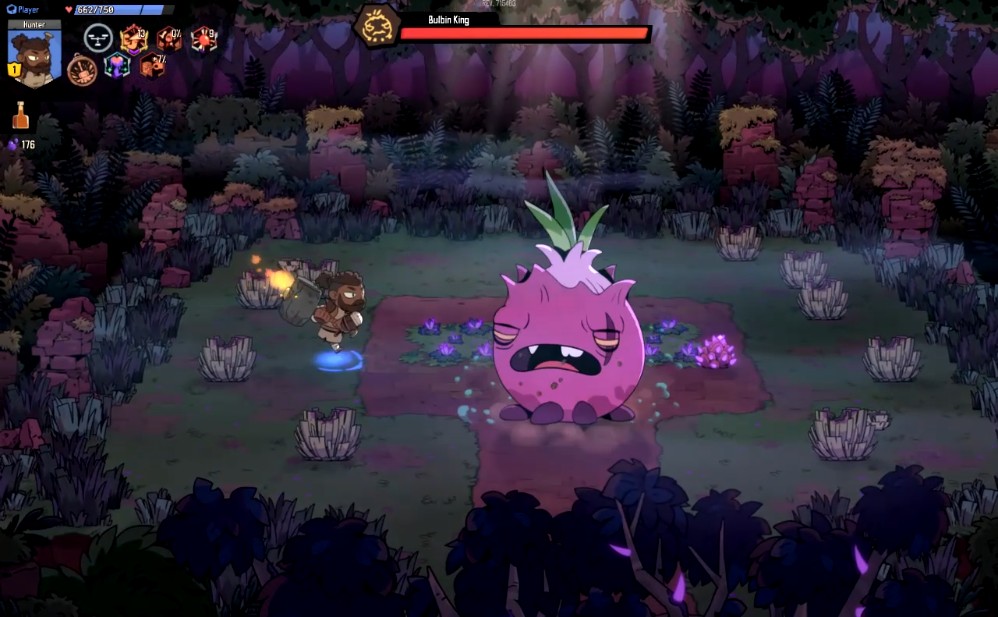
Boss fights are another highlight. Each boss has unique mechanics and attack patterns, such as:
- An armadillo boss rolling across the arena
- A plant-like enemy firing projectile attacks and gas clouds that invert your controls
These encounters feel distinct and memorable.
Co-Op and Replayability
Rotwood supports four-player couch co-op, and it’s clear that the game was designed with multiplayer in mind.
While the entire experience can be played solo—and I did exactly that—it often feels like the game would truly shine when played with friends. Some difficulty spikes and enemy encounters seem balanced around cooperative play.
That doesn’t mean solo players can’t enjoy it, but the design definitely leans toward multiplayer synergy.
Replayability is strong thanks to procedural level layouts, randomized enemy encounters, branching paths, and bonus objectives within each biome.
Each level offers multiple optional challenges—like defeating a certain number of enemies or collecting power-ups—which reward additional upgrade materials.
Presentation & Performance
Visually, Rotwood is fantastic.
The game features a hand-drawn, cartoon-inspired art style that balances eerie forest environments with bright, colorful characters and enemies. It’s whimsical yet slightly dark, giving the game a distinctive personality.
Enemy designs evolve as the game progresses. Early levels feature simple plant-like creatures, but later areas introduce more complex enemies with unique attack patterns.
Bosses, in particular, look fantastic and have strong visual identities.
Performance on Steam Deck is excellent. The game ran smoothly at what felt like a consistent 60 FPS during my playtime.
The only downside is that some UI elements—particularly item descriptions and text—can be a bit small on the handheld screen.
Pros
Rotwood’s combat system is engaging and rewards skillful play. Learning weapon timings, mastering dodges, and exploiting environmental hazards creates satisfying encounters that feel strategic rather than chaotic.
The roguelite structure works well, offering branching paths, randomized encounters, and a strong sense of progression between runs. There’s a surprising amount of depth in the game’s systems, from weight classes to gear upgrades and power crystals.
Boss fights are another standout feature, delivering memorable mechanics and unique visual designs that keep runs exciting.
The art style is vibrant and distinctive, blending eerie forest aesthetics with colorful, hand-drawn animation. It’s one of the game’s strongest aspects.
Finally, the addition of four-player couch co-op is a huge plus. Players who enjoy cooperative roguelites will likely find even more value in the experience.
Cons
The biggest drawback is the narrative. While the premise is serviceable, the characters and story never become particularly engaging. Most NPCs feel like functional vendors rather than meaningful personalities.
Some weapon balance issues also stand out. Certain weapons feel far more satisfying to use than others, and the spear in particular felt awkward and unforgiving during my playthrough.
There are also quite a few different currencies and upgrade systems, which can feel unnecessarily complicated at first.
Finally, while the game is fully playable solo, parts of the experience seem clearly designed with cooperative play in mind. Solo players may occasionally feel that the balance leans toward multiplayer.
Overall – Should You Play Rotwood?
Rotwood is a good roguelite brawler that comes very close to being great.
Its combat is skill-based and satisfying, the progression systems are deeper than they initially appear, and the art style is fantastic. The roguelite structure keeps runs engaging and encourages experimentation with builds and weapons.
However, it doesn’t quite reach the heights of the genre’s best games. The story lacks impact, certain weapons feel underwhelming, and the overall experience feels like it truly shines when played with friends rather than solo.
If you’re a co-op gamer looking for your next roguelite to play with friends, Rotwood is an easy recommendation.
If you’re primarily a single-player roguelite fan, like me, it’s still worth checking out—but it may feel more like an acquired taste.