
Introduction
I’m permanently at war with my gaming backlog, and like most wars of attrition, I’m losing badly. New releases keep piling on while older games stare back at me from a meticulously organized spreadsheet—ranked, categorized, and quietly judging me. Slot one is comfort food: roguelikes and sports games for decompression. Slot two is experimentation. Slot three is reserved for big narrative journeys.
It’s that second category where 9 Kings quietly ambushed me. Recently landing on Game Pass, it immediately set off alarm bells because it belongs to my personal gaming kryptonite: roguelikes. I told myself I’d “just try it.” Hours later, I was still saying “one more turn.”
9 Kings is a fast-paced roguelike kingdom builder that blends auto-battler combat with city-building and deck-based progression. It’s simple on the surface, dangerously deep underneath, and almost perfectly designed to devour your free time.
Gameplay
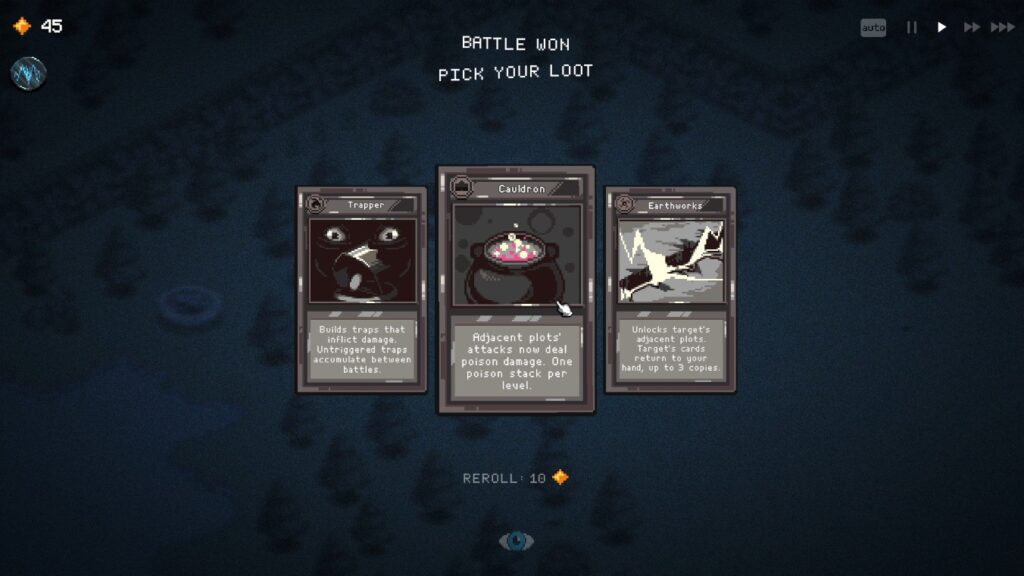
At the heart of 9 Kings is a deceptively elegant loop. You choose one of several unlockable kings—each representing a distinct faction—and begin your run with a compact 3×3 grid centered around your castle. Every turn, you draw cards that represent units, buildings, or special effects, then place them onto your grid. Once your choices are locked in, enemies attack, combat resolves automatically, and the cycle begins again.
Combat in 9 Kings functions largely as an auto-battler. Units clash without direct micromanagement, though you do have limited but impactful control—most notably the ability to drop massive rocks onto enemies, which never stops feeling good. While manual combat is available, I quickly shifted to auto mode so I could focus entirely on optimizing builds, synergies, and positioning.
Each king drastically alters how the game plays. You start with the King of Nothing, a flexible generalist, but over time unlock wildly different rulers. The King of Blood leans into vampiric sacrifice mechanics. The King of Greed turns money into power. My personal favorite, the King of Progress, throws fantasy convention out the window and shows up with machine guns and gatling towers. Each deck introduces new priorities, forcing you to adapt your strategy rather than relying on a single dominant playstyle—at least in theory.
Visuals and Presentation
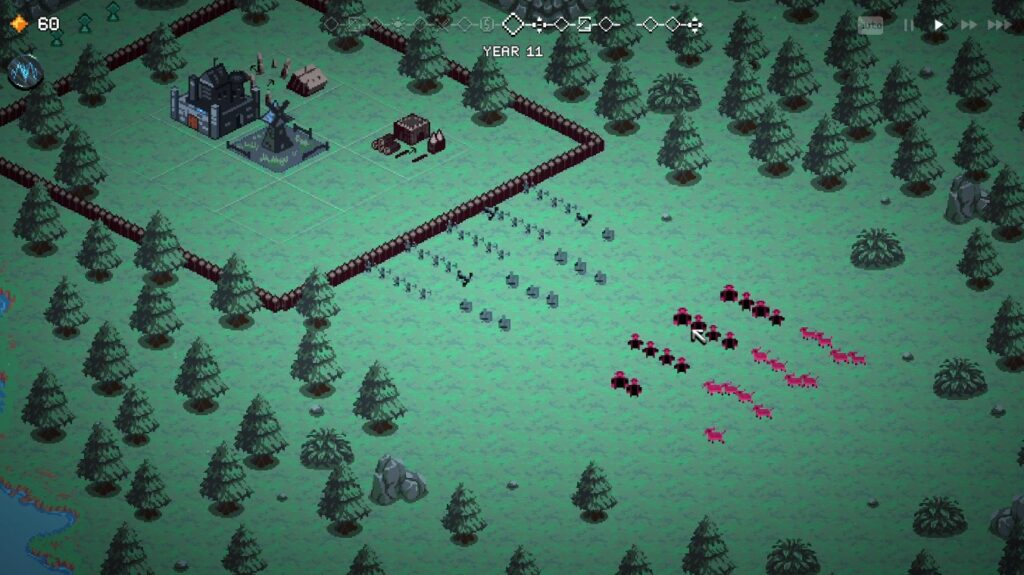
Visually, 9 Kings leans into minimalist 2D pixel art, and it works remarkably well. The art style has a handcrafted charm that gives the game a distinct identity. Water ripples beautifully, trees and terrain feel alive, and the kingdoms you build look surprisingly good given the simplicity of the presentation.
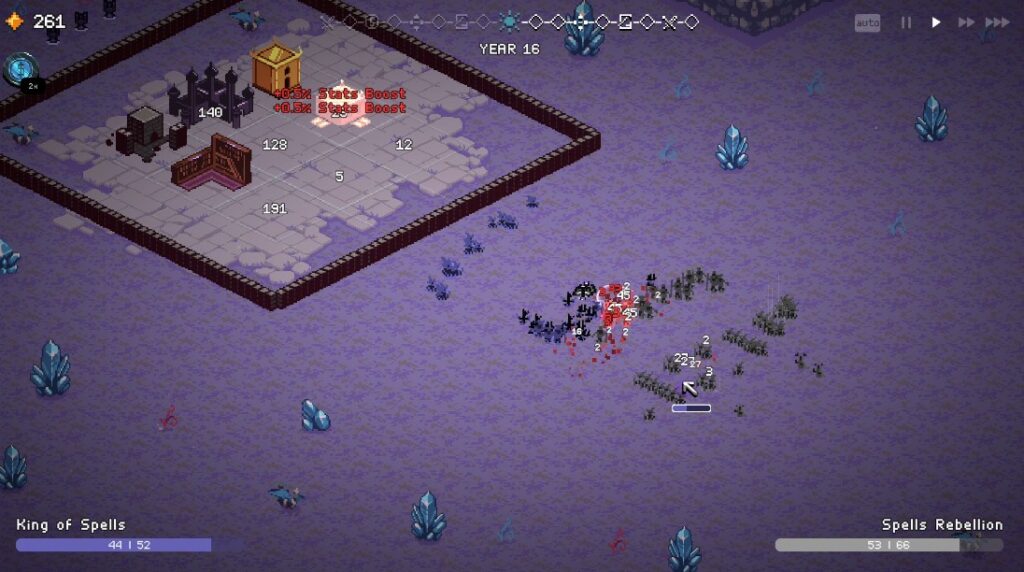
Buildings like castles, trebuchets, scouting towers, and farms all have unique visual identities, and each unit type carries its own personality. While the pixel art can blur together during larger battles, the overall aesthetic remains striking. It may look like something scribbled by bored kids in a notebook at first glance, but the longer you play, the more intentional and expressive it feels.
Progression and Replayability
Progression is where 9 Kings truly shines. Every run feeds into the next, unlocking new kings, expanding grid options, and introducing additional mechanics. Decks don’t just upgrade stats; they layer in special abilities that radically alter how units behave. Synergies stack, perks compound, and before long you’re creating absurdly powerful builds that feel like you’ve “broken” the game—in the best way possible.
However, balance issues do emerge. Some kings—most notably the King of Greed—scale far more effectively than others. As a result, certain factions feel like optimal choices, while others exist mainly for completionists or self-imposed challenges. This imbalance doesn’t ruin the experience, but it does flatten strategic diversity over time.
Pros
One of 9 Kings’ greatest strengths is how effortlessly it blends accessibility with depth. The gameplay loop is instantly readable but packed with layered mechanics that reward experimentation. The roguelike structure ensures no two runs feel identical, while the variety of kings and deck synergies keeps the experience fresh across dozens of hours. Its pixel art aesthetic adds warmth and personality, making each kingdom feel uniquely yours. The game also excels as a “wind-down” title—relaxing without being shallow, engaging without demanding constant attention.
Cons
Despite its strengths, 9 Kings isn’t without issues. Visual clarity can suffer during larger encounters, where overlapping pixel art makes it difficult to distinguish unit types in the chaos of battle. Balance inconsistencies between kings reduce long-term strategic variety, as stronger factions overshadow others. While combat automation keeps the pace brisk, players who crave more direct control may find the experience too hands-off. As an Early Access title, these issues feel fixable—but they’re noticeable in extended play.
Overall / Should You Play It?
9 Kings is a dangerously compelling roguelike kingdom builder that understands exactly how to hook players who love optimization, experimentation, and “just one more turn” gameplay. It looks simple, plays fast, and hides a deep, flexible system underneath its minimalist exterior. While balance issues and occasional visual clutter hold it back from greatness, the core experience is strong enough to recommend without hesitation.
If roguelikes already live rent-free in your backlog—or if you enjoy strategy games that reward creativity over execution—9 Kings is absolutely worth your time.