Screamer

7
C-Tier
Genre:
Arcade, Racing
Platforms:
PC, Ps5, Xbox (Series, One)
Tier Score:
C-Tier
Developer:
PLAION
Screamer Review – A Stylish Anime Racer with Brilliant Ideas That Demand Your Full Attention
Introduction
I’ll be honest—this game had me from the jump.
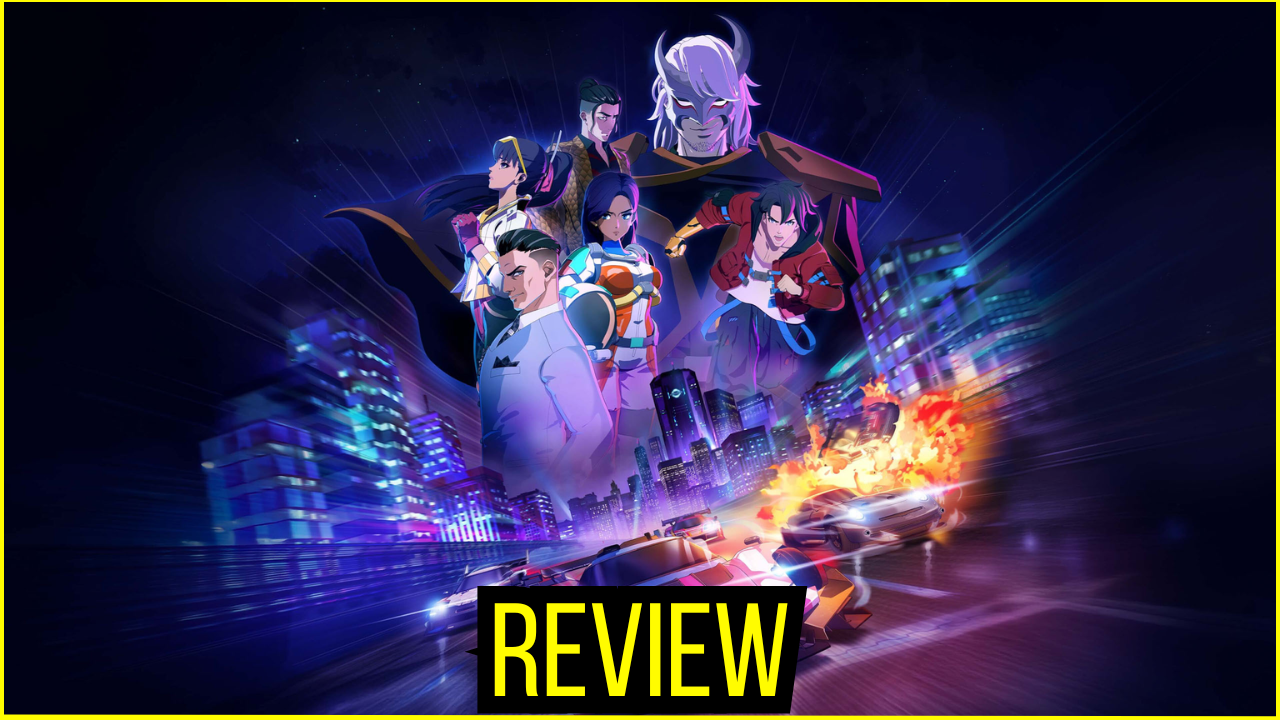
I’m a huge anime fan. Every season I’m watching multiple shows, diving into different genres, appreciating art styles, character arcs, and storytelling. So when I first saw Screamer—an anime-stylized racing game with high-energy presentation—it immediately grabbed my attention. It felt like something made specifically for me.
And on paper? This game sounds incredible.
You’ve got that arcade racing DNA, something reminiscent of the chaos and energy of the Burnout series, mixed with a bold anime presentation and a story-driven campaign. That combination should be a slam dunk for someone like me—especially since I tend to prefer more forgiving, arcade-style racers over hardcore simulations like Gran Turismo or F1.
But here’s the thing about Screamer…
It’s not as approachable as it looks.
What I found instead is a game that is deep, skill-based, and surprisingly demanding, built around a unique control system that takes real time and effort to master. And while I came away respecting it a lot, it never quite crossed that line into something I truly loved.
Narrative
Screamer’s story is structured around its Tournament Mode, which serves as the main campaign and spans roughly 15 to 20 hours across more than 70 episodes.
The premise is simple but effective: a mysterious figure known as Mr. A offers an absurd cash prize—one hundred billion dollars—to the winner of a high-stakes racing tournament. From there, the story branches out across multiple teams and characters, each with their own motivations, backgrounds, and stakes in the competition.
What makes this narrative structure interesting is that the game constantly shifts perspectives. You’re not just following one protagonist—you’re jumping between different groups, including idols, scientists, soldiers, and even a Yakuza faction. That variety keeps things fresh and gives the world a broader scope, but it also creates some pacing and cohesion issues early on.
At times, the story can feel a bit disjointed, especially when you’re still trying to figure out how all these characters connect. It’s not until later in the campaign that things begin to come together in a more meaningful way.
That said, there are definitely standout moments.
The Yakuza storyline in particular was one of the more engaging arcs for me, offering stronger character motivations and a tone that felt more grounded compared to some of the other narratives. On the flip side, some storylines—like the idol-focused ones—just didn’t resonate as much.
Where Screamer truly shines, though, is in its presentation.
The fully animated anime cutscenes are absolutely fantastic. They’re expressive, dynamic, and visually striking in a way that really elevates the storytelling. You can see the characters emote, interact, and exist in a way that makes them feel alive.
Most of the story, however, is told through visual novel-style segments. These are fully voice-acted and well-presented, but I couldn’t help but wish there were more of those high-quality animated scenes sprinkled throughout.
There’s also an interesting touch with characters speaking multiple languages—German, French, Japanese, and English—which adds a layer of authenticity to the world. But the game doesn’t fully explain how this works in-universe, which makes the world-building feel slightly undercooked in that regard.
Gameplay
This is where Screamer truly defines itself—and where it will either hook you or completely lose you.
At its core, Screamer is an arcade racer, but it introduces a major twist: a twin-stick control system.
Left analog stick controls steering
Right analog stick controls drifting
That alone changes everything.
At first, this feels completely unnatural. Most racing games use the right stick for camera control, so rewiring your brain to use it for drifting takes time. And not just a little time—it took me several races before things started to click.
But once it does click?
There’s a real sense of satisfaction.
You feel like you have direct control over your car’s movement, especially when chaining together drifts, managing turns, and navigating tight corners. It’s a system that rewards precision and timing, and it makes every successful race feel earned.
Drifting, in particular, becomes the most important skill in the game. Learning when to tap the brake, how to angle your drift, and how to maintain control through turns is essential. It’s not something you can just casually pick up—you have to lock in and learn it.
Beyond that, there are additional mechanics that add depth:
Manual gear shifting for boost timing
A Sync meter that builds for speed bursts
An Entropy system that allows for combat abilities
Individually, these systems are optional. But once you start engaging with them, you realize how much of an edge they can give you.
The game also introduces variety through its character-based vehicles, where each car feels like an extension of its driver. Some excel on straightaways, others dominate in tight turns, and switching between them can dramatically change how a race feels.
However, not everything is smooth.
The AI can feel brutally unforgiving, even on easier difficulties. Small mistakes—missing a drift, hitting a wall—can instantly drop you from first place to last. It creates tension, but it can also feel unfair at times.
There’s also an issue with track repetition. While the tracks themselves are well-designed, it doesn’t take long before you start seeing the same environments reused, which leads to a sense of familiarity that sets in a bit too early.
Pros
Screamer’s biggest strength is its commitment to innovation.
The twin-stick control scheme is bold, different, and ultimately rewarding for players who take the time to master it. It gives the game a unique identity in a crowded racing genre.
The anime presentation is top-tier, from the vibrant art style to the high-quality animated cutscenes. It brings a level of personality and flair that you don’t often see in racing games.
There’s also a ton of content here. With over 70 episodes, multiple playable characters, unlockables, customization options, and additional modes like multiplayer and split-screen, the game feels complete and packed with value.
Performance is another highlight. On Steam Deck, the game runs surprisingly well, maintaining strong performance and looking great on a handheld screen.
Cons
Despite its strengths, Screamer has a few notable drawbacks.
The biggest is its accessibility. This is not a pick-up-and-play racer. The control scheme demands time and effort, which may turn off players looking for a more casual experience.
The AI difficulty can feel inconsistent and, at times, unfair. It punishes mistakes harshly, which can be frustrating rather than motivating.
Track repetition also becomes noticeable earlier than expected, which impacts the long-term variety of the experience.
Finally, while the story has its moments, it can feel uneven and disjointed, especially in the early chapters.
Overall / Should You Play
Screamer is a game that I genuinely like—but don’t quite love.
It’s doing a lot of really cool things. The controls are innovative, the presentation is fantastic, and there’s a ton of content to dig into. It’s clear that this is a well-crafted game with a strong vision.
But it’s also a game that demands something from you.
You have to meet it halfway. You have to learn its systems, adapt to its controls, and accept its difficulty. And for some players, that’s going to be exactly what they want.
For me?
I enjoyed my time with it. I respected what it was doing. But it never became that game I couldn’t put down.
If you’re a racing fan looking for something fresh and challenging, Screamer is absolutely worth your time.
If you’re more of a casual player looking for a laid-back racing experience… this might be a tougher sell.
Either way, it’s a game that’s easy to respect—even if it doesn’t fully win you over.