
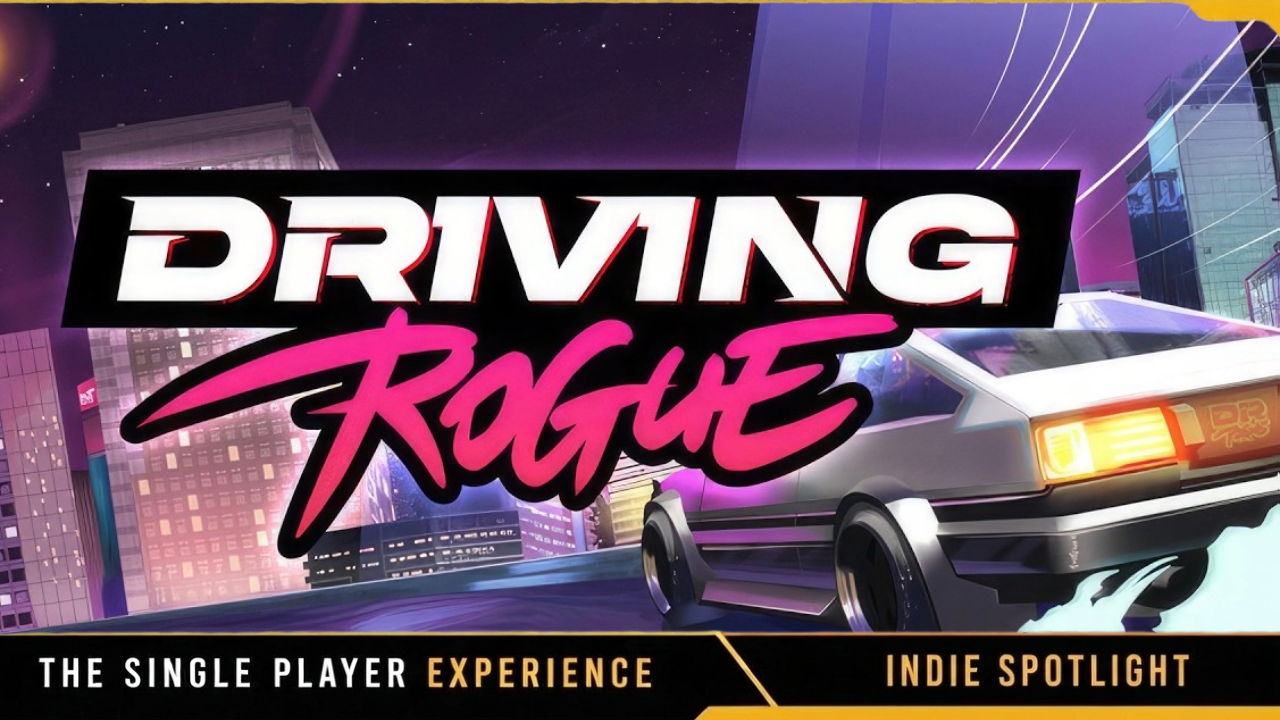
What happens when the high-speed chaos of an old-school arcade racer collides with the addictive “just one more run” mentality of a roguelite? You get one of the most unexpectedly enjoyable indie games I’ve played this month.
Developer: Gravity Works
Publishers: Gravity Works, Cosmic Shift Studios
Release Date: September 17, 2026
Platforms: PC
Genre: Arcade racing, roguelite, deck-building
Price: $9.99
SPE Review: Read the full Driving Rogue review
Why This Game?
I’m not a racing game guy. I know, I know. For someone who spends his time talking about video games, that’s practically a confession. But I’ve accepted the fact that I’m mediocre at racing games, and after years of bouncing between Forza Horizon, Need for Speed, and Burnout, I’ve also accepted that I’m not particularly interested in getting good at them. I’ll jump behind the wheel, enjoy the adrenaline rush for a little while, and eventually find myself itching to play something else. Racing games and I have always had a short-term relationship.
So why am I dedicating the October edition of SPE Indie Spotlight to Driving Rogue?
Because sometimes a game deserves recognition not for being the best thing you’ve played all month, but for doing something interesting enough that you want more people to experience it. Driving Rogue is one of those games. It takes the high-speed thrills of an old-school arcade racer, combines them with the repeatable runs and upgrade-driven progression of a roguelite, and creates an experience that kept me behind the wheel considerably longer than I expected.
Imagine a Venn diagram. One circle contains arcade racing games like Need for Speed Underground, Burnout, and Ridge Racer, with a little Cruis’n USA thrown in for good measure. The other contains roguelite fans like me, the people who can spend hours chasing another run, hunting for better upgrades, and convincing themselves that the next attempt will be the one where everything finally clicks. Driving Rogue sits right in the middle of those circles, and the overlap is where the magic happens.
There’s a nostalgic quality to the experience that immediately appealed to me. This feels like a throwback to the early 2000s, when arcade racers leaned into exaggerated speed, flashy presentation, memorable music, and the simple pleasure of getting behind the wheel and causing a little chaos. But rather than relying on nostalgia alone, Driving Rogue gives that familiar formula a roguelite structure that makes each run feel like an opportunity to improve, experiment, and push a little farther than you did before.
That distinction matters. I’m not someone who typically wants to spend an entire weekend playing a racing game, yet I found myself returning to Driving Rogue because the next run always offered something worth chasing. Maybe I could improve my score, build a better car, unlock another upgrade, or finally get through a stage that had given me trouble. The game understands the appeal of incremental progress, and it uses that appeal to make its racing loop genuinely addictive.
That’s why Driving Rogue earned its place in this month’s Spotlight. It’s not necessarily the greatest game I’ve played recently, but it’s one of the more distinctive experiences I’ve had, and I think that deserves recognition. More racing fans should know about it, especially those who miss the personality of classic arcade racers and anyone who has ever looked at a roguelite and thought, “Sure, I’ll do one more run.”
What Makes It Stand Out?
An Arcade Racer With a Roguelite Brain
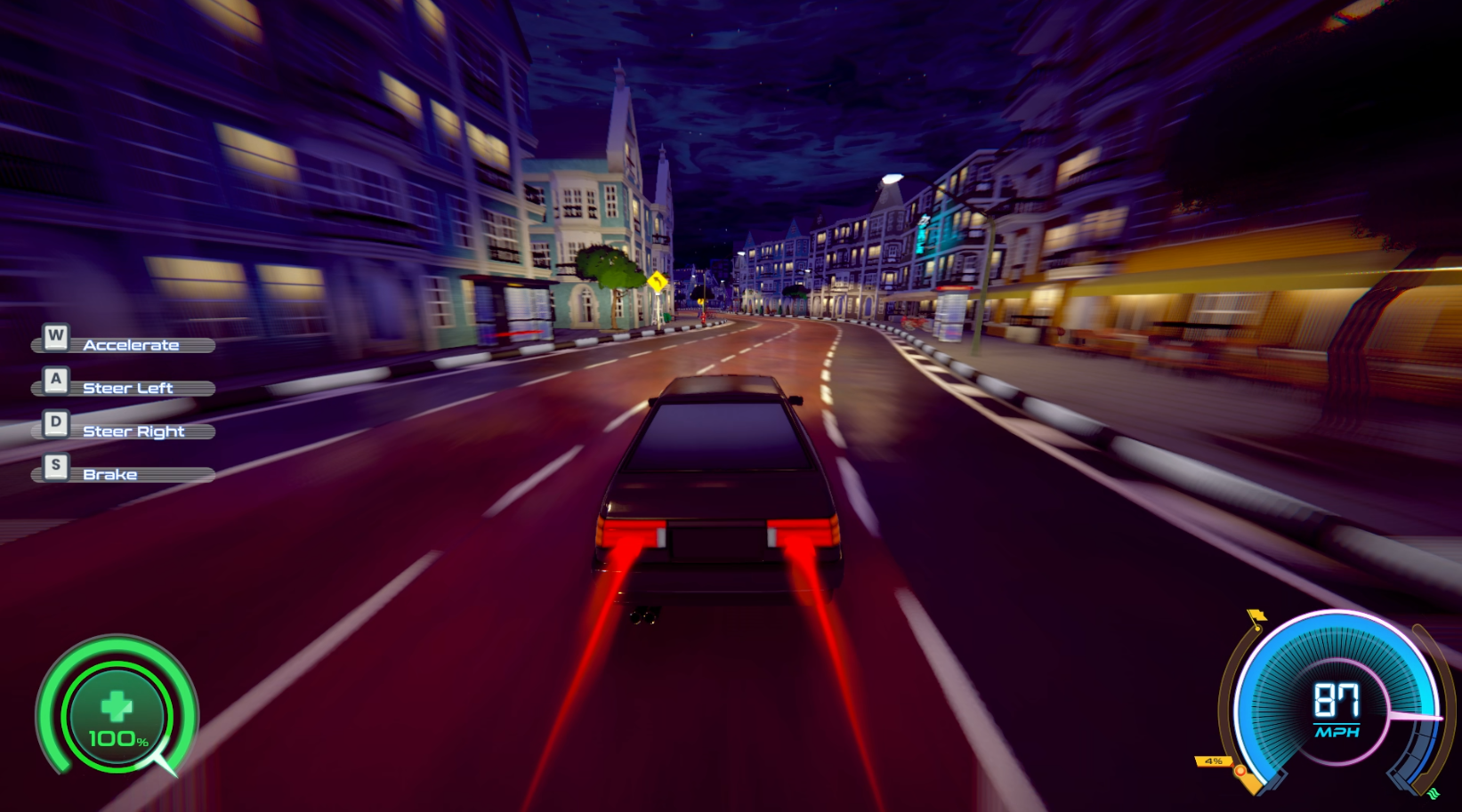
The first thing Driving Rogue gets right is its understanding of what makes arcade racing fun. You’re not here to spend hours tuning tire pressure or studying realistic vehicle physics. You’re here to drive fast, drift through traffic, squeeze through impossibly narrow gaps, and rack up points while trying not to turn your car into an expensive collection of scrap metal.
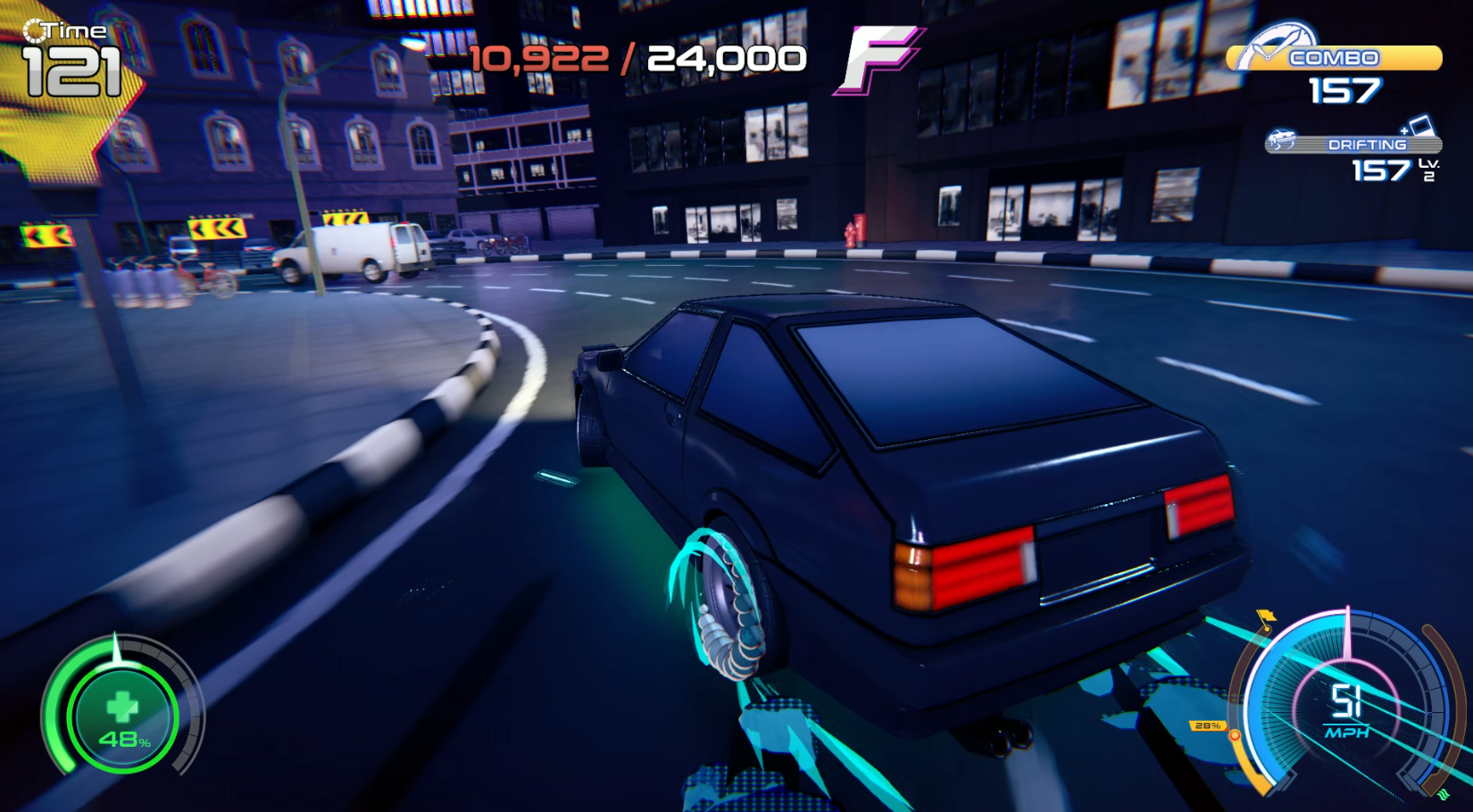
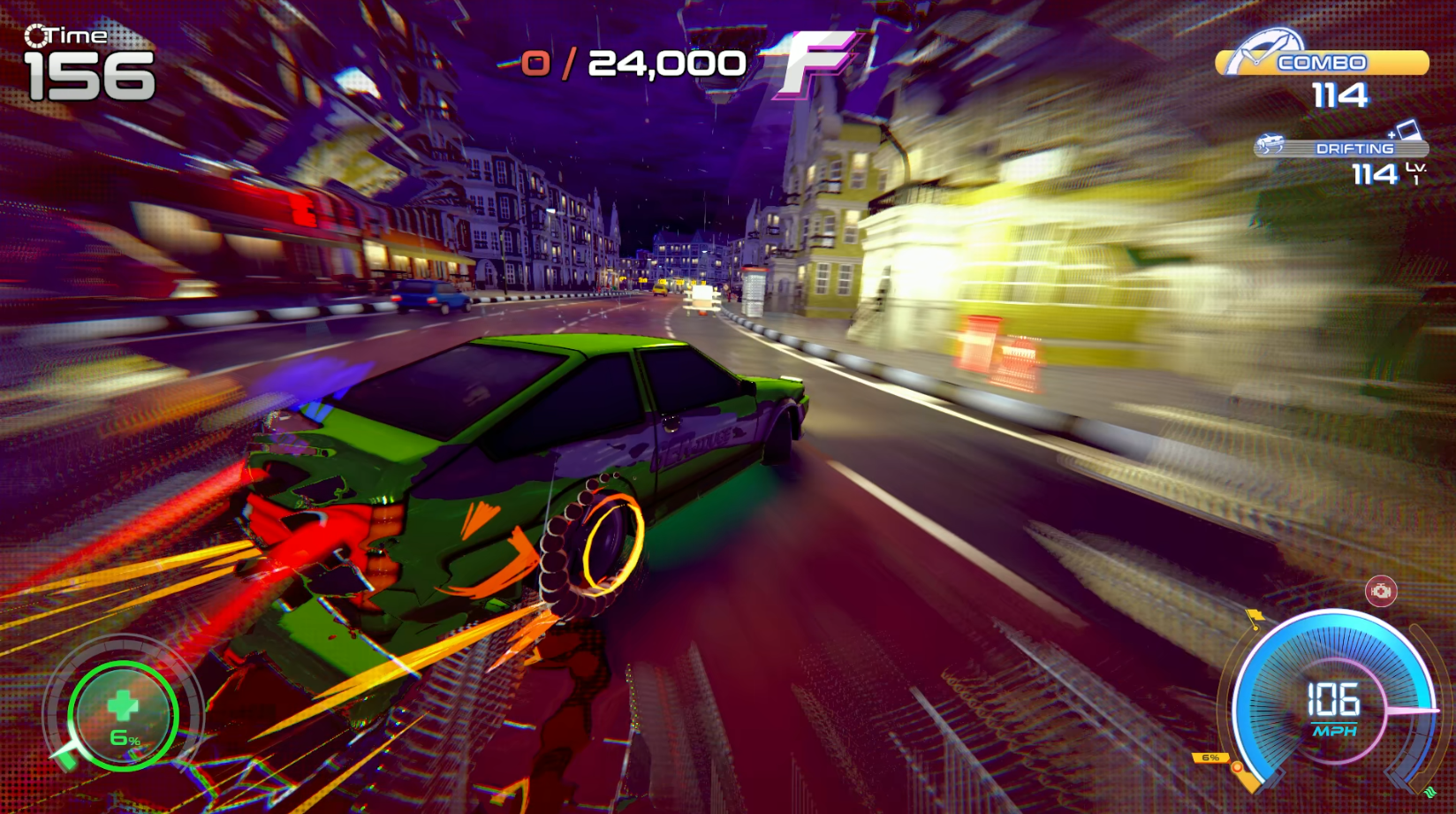
The driving has an immediate pick-up-and-play appeal, but there’s enough nuance beneath the surface to reward practice. Drifting, slipstreaming behind other vehicles, and narrowly avoiding collisions all contribute to your score. The trick is knowing when to push your luck and when to ease off before an aggressive maneuver sends you careening into something you really should have seen coming. Crashes damage your vehicle and break your combo, while running out of health can end an otherwise promising attempt.
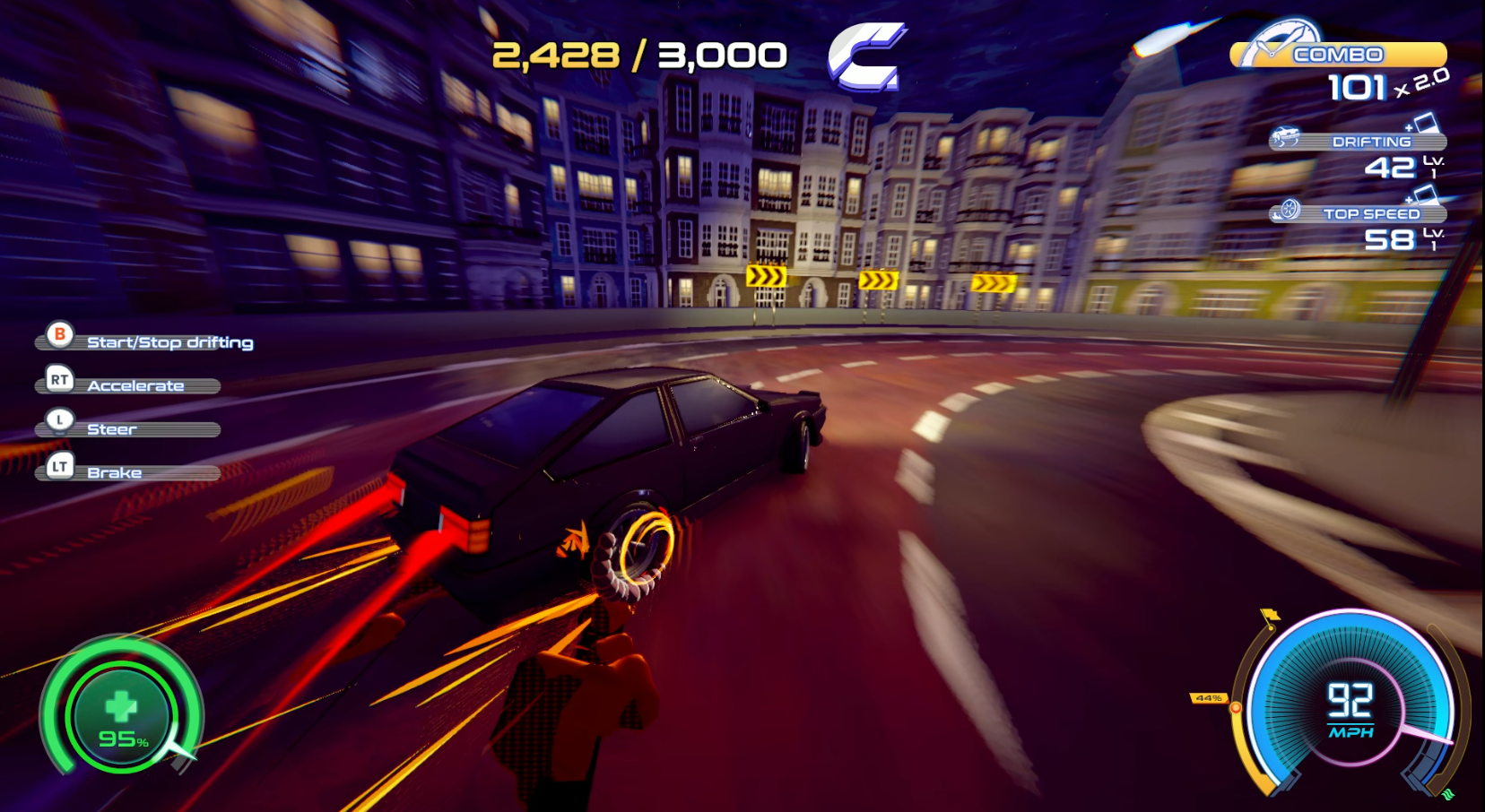
Drifting is particularly satisfying because it creates a constant risk-and-reward calculation. You want to maintain your momentum and keep your combo alive, but overcommitting can turn a stylish maneuver into a spectacular failure. I’m not exactly the person you’d recruit to teach a master class in racing technique, so there were plenty of occasions when my ambitions exceeded my abilities. Still, the game made it enjoyable to learn from those mistakes because I could feel myself getting more comfortable with the mechanics.
That balance between accessibility and mastery is important. Driving Rogue is easy enough to understand that you can jump in and start having fun almost immediately, but performing well requires more than holding down the accelerator and hoping for the best. You need to learn how to manage your speed, recognize opportunities for near misses, and make decisions that preserve your car’s health without sacrificing your score. The game doesn’t demand that you become a professional driver, but it gives you plenty of reasons to become a better one.
Then there’s the roguelite structure, which is what separates Driving Rogue from a conventional arcade racer. Between races, you can spend currency on cards that modify your vehicle, adjusting everything from durability and acceleration to handling and other performance characteristics. Some upgrades make your car more resilient, while others encourage a more aggressive approach. You might sacrifice acceleration for additional durability, for example, or invest in upgrades that reward you for surviving longer into a run.
These decisions give the game a strategic layer that I wasn’t expecting to enjoy quite as much as I did. The cards aren’t just numbers sitting on a menu; they can meaningfully change how you approach the next race. A sturdier vehicle might let you take risks you would otherwise avoid, while a different set of upgrades could encourage you to prioritize clean driving and preserve your health.
I’m not going to pretend that Driving Rogue turned me into a deck-building enthusiast on four wheels. I didn’t become obsessed with discovering the perfect combination of cards, and I wasn’t constantly chasing some elaborate build that would break the game wide open. But the system works, and it gives each run a sense of progression that makes another attempt feel worthwhile. That’s the important part.
For roguelite fans, the appeal is familiar: you start a run, make the most of the resources available to you, gradually improve your chances of success, and see how far you can get. For racing fans, it adds a layer of customization and strategy that makes the driving feel connected to something bigger than a single race. The combination works surprisingly well, and it gives Driving Rogue an identity that extends beyond its flashy presentation.
A Love Letter to the Arcade Racing Era
One of my favorite things about Driving Rogue is how much it reminds me of the arcade racing games that made the genre so appealing in the first place. There’s a particular kind of energy associated with games like Need for Speed Underground, Burnout, Ridge Racer, and Cruis’n USA. They make driving feel immediate, exciting, and just a little ridiculous in the best possible way. You’re chasing speed, taking risks, and enjoying the spectacle of it all rather than worrying about whether every turn reflects the behavior of a real vehicle.
Driving Rogue captures that spirit while giving it a modern indie presentation. Its vibrant neon colors and stylized urban environments pop off the screen, creating a visual identity that feels youthful and energetic. The presentation reminded me of Need for Speed Unbound, particularly that game’s graffiti-inspired visual effects and heightened sense of style. Driving Rogue doesn’t aim for the same level of visual realism, but its more exaggerated arcade aesthetic suits the experience beautifully.
The result is a game that looks like it knows exactly what it wants to be. The cars, environments, and effects work together to sell the fantasy of tearing through an urban landscape at ridiculous speeds. There’s a sense of personality here that I appreciate, especially in a genre where many games compete to deliver increasingly realistic vehicles and driving conditions.
The music is another major part of that identity. The soundtrack fits the experience remarkably well, giving the races an energetic backdrop that makes each run feel like its own little event. The combination of the neon presentation, aggressive driving, and music creates an atmosphere that feels like a celebration of arcade racing rather than an attempt to recreate motorsport.
And that’s what I want from a game like this. I don’t need it to convince me that I’m a professional driver. I want it to make me feel like I’m flying through traffic, pulling off ridiculous maneuvers, and having a great time doing it. Driving Rogue understands the assignment.
A Game That Knows How to Respect Your Time and Money
Here’s where Driving Rogue becomes particularly easy to recommend: it costs $9.99.
That’s right. Ten dollars.
We’re at a point where the value proposition of a video game matters more than ever. Between major releases competing for our attention, subscription services, and the sheer number of games available to play, it’s becoming increasingly important for a game to justify not only its price but also the time you’re going to spend with it. Driving Rogue makes a compelling case on both fronts.
Individual runs can last anywhere from a few minutes to around 20 minutes, depending on how far you progress and how long you survive. That makes the game an easy fit for shorter gaming sessions, but its progression systems also give you reasons to settle in for a much longer stretch. You can work toward new player levels, unlock additional cards and vehicles, pursue achievements, and challenge yourself to improve your performance. Endless procedural runs and online co-op provide additional options for players who want to keep the experience going.
I can easily see someone putting dozens of hours into this game, especially if they enjoy chasing high scores and gradually mastering its systems. There’s a satisfying rhythm to completing a run, earning upgrades, and immediately wanting to see how those upgrades affect your next attempt. The game is structured around that familiar roguelite compulsion, and the relatively short individual runs make it easy to keep coming back.
It’s also a natural fit for portable gaming. I found the game ran phenomenally well on both my PC and Steam Deck, and the full controller support worked flawlessly with my controller. That combination makes it particularly appealing for handheld play, where you can pick it up, complete a run, and put it down without needing to commit to a lengthy session.
Honestly, I can imagine Driving Rogue being a fantastic game to have installed before a long flight. You could fire it up, play a few runs, chase some upgrades, and keep yourself entertained without needing to remember where you left off in a sprawling campaign. That’s not a small benefit for a game designed around repeatable sessions.
The game also offers a Steam demo, so you don’t have to take my word for it. If the combination of arcade racing and roguelite progression sounds interesting but you’re unsure whether the driving will click for you, you can try it before spending anything.
At ten dollars, Driving Rogue doesn’t need to become your new favorite game to justify the purchase. It simply needs to deliver a good time, and it does that remarkably well. The amount of replayability available for the price makes it the kind of indie game I genuinely enjoy supporting: a focused project with a clear identity that delivers on its promises without asking players to make a major financial commitment.
The SPE Perspective: Who Should Play Driving Rogue?
If you grew up playing Need for Speed Underground, Burnout, Ridge Racer, or Cruis’n USA, I think Driving Rogue deserves a spot on your radar. It captures much of what made those arcade racers appealing while introducing a progression system that gives you reasons to keep coming back. The driving is accessible, the presentation has plenty of personality, and the combination of drifting, near misses, and score-chasing creates a loop that’s easy to understand but satisfying to improve at.
Roguelite fans should pay attention, too. If you enjoy games built around repeatable runs, incremental upgrades, and the feeling that every attempt can take you a little farther than the last, Driving Rogue offers a fun way to apply those ideas to a genre you might not normally play. The card system gives you opportunities to adjust your vehicle to suit the challenges ahead, and the run-based structure makes it easy to jump back in after a failure.
But perhaps my strongest recommendation comes from the fact that I’m not particularly good at racing games. I don’t have an endless appetite for shaving seconds off lap times, mastering every turn, or grinding until I can outperform everyone else on a leaderboard. Historically, I’ve enjoyed racing games in small doses before moving on to something else. Driving Rogue kept me engaged for longer because it gave me additional goals to pursue beyond simply driving well.
That doesn’t mean it transformed me into a racing-game devotee. I’m still much more likely to spend my time with a single-player action-adventure or a roguelite than a traditional racer. But it demonstrated how a thoughtful combination of genres can give a familiar experience a new sense of momentum. The racing provides the immediate excitement, while the roguelite systems give me a reason to return.
I should also be clear about what I haven’t experienced. Driving Rogue supports online co-op, which gives players another way to enjoy its racing, but I focused on the single-player experience for this feature. I can’t speak firsthand to how well the co-op works or how it changes the overall experience. The single-player loop, however, stands on its own as a compelling reason to give the game a shot.
Ultimately, I think Driving Rogue is a game for people who appreciate a focused, well-executed idea. It isn’t trying to be a sprawling racing simulation or a narrative-heavy adventure. It’s trying to make arcade racing fun, add a layer of roguelite progression, and give players plenty of reasons to take another run. In my experience, it succeeds.
Verdict and Next Steps
The reason I chose Driving Rogue for the October edition of SPE Indie Spotlight is simple: it’s a game that knows what it wants to be and commits to that vision. The arcade racing is immediately enjoyable, the roguelite progression adds meaningful replayability, the neon presentation gives it a distinctive personality, and the soundtrack brings the whole package together. It’s the sort of game that can surprise you by holding your attention long after you thought you’d had your fill of racing.
I particularly appreciate that it doesn’t need to reinvent an entire genre to stand out. It takes two familiar ideas, brings them together in a way that makes sense, and delivers an experience that feels cohesive and thoughtfully designed. For a small indie game, that kind of clarity is worth celebrating.
And then there’s the price. At $9.99, Driving Rogue offers the kind of value that makes it easy to recommend to people looking for something new to play. Whether you’re chasing high scores, unlocking vehicles, experimenting with upgrades, or simply looking for a fun game to play on your Steam Deck, there’s plenty here to keep you entertained.
This is exactly the kind of game I want to highlight through SPE Indie Spotlight. It may not be the biggest release of the month, and it may not appeal to every kind of player, but it has personality, a strong gameplay loop, and a clear understanding of what makes it enjoyable. More racing fans should know about it, and roguelite fans looking for something a little different should give it a look, too.
My recommendation: If you miss the arcade racing games of the early 2000s, love a good roguelite gameplay loop, or simply want a fun game that punches well above its $9.99 price tag, put Driving Rogue on your radar.
Where to Play
- Steam: Get Driving Rogue on Steam
- Try Before You Buy: A demo is available on Steam.
- Full SPE Review: Read the Driving Rogue review on The Single Player Experience
Driving Rogue is a reminder that an indie game doesn’t have to be the biggest, longest, or most ambitious release to deserve attention. Sometimes all it takes is a great idea, a satisfying gameplay loop, and the confidence to deliver exactly what players came for. At ten dollars, this is one joyride that’s well worth taking.