Intro/ Set The Scene
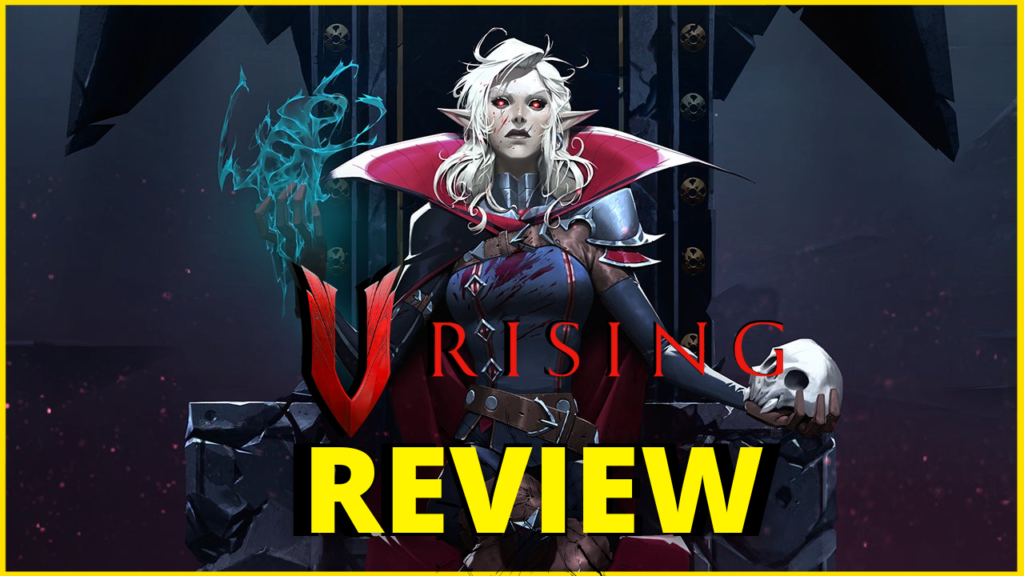
There is something especially satisfying about discovering a game you expected to enjoy casually, only to find yourself sinking more than 150 hours into it. V Rising was that game for me. I went in thinking I would probably have a good time, maybe spend a few evenings hunting vampires and building a castle, and eventually move on to something else. Instead, Stunlock Studios delivered one of the biggest surprises of my gaming year: a wonderfully addictive blend of action RPG combat, survival mechanics, and castle building that kept giving me reasons to come back.
I’m not particularly invested in horror, but vampires have always been a different story. Between Castlevania, Blade, Van Helsing, Underworld, and The Vampire Diaries, I have a soft spot for vampire stories that lean into gothic atmosphere and supernatural spectacle without necessarily trying to scare the hell out of me. The trailers for V Rising caught my attention because they seemed to promise exactly that kind of experience, wrapped in a game that looked right at home on my Steam Deck.
What I didn’t anticipate was just how well its different systems would work together. The first few hours had me completely hooked, and even after 150.1 hours on Steam, I still found myself thinking about what I wanted to build next, which boss I wanted to hunt, or what materials I needed to improve my gear. V Rising isn’t without its shortcomings, particularly when it comes to its narrative and a few quality-of-life frustrations, but its central gameplay loop is so compelling that I have a hard time putting it down.
Let’s get into it.
Narrative
I’ll be honest: after spending more than 150 hours with V Rising, I’m still not entirely sure I could give you a satisfying explanation of its overarching story. You awaken as a weakened vampire, begin hunting for blood, and gradually rebuild your strength in a gothic world populated by humans, monsters, and other supernatural threats. There’s a world here with its own history and mysteries, but the game doesn’t do much to establish a personal narrative or give you a particularly compelling reason to care about your journey beyond becoming more powerful.
After creating your vampire, you’re largely thrown into the gameplay. There’s no substantial opening backstory or character-driven introduction to establish who you are, what happened to you, or what you’re ultimately trying to accomplish. I understand that V Rising isn’t trying to be the next great narrative RPG, and I certainly didn’t come into it expecting a sprawling vampire drama. Still, I would have appreciated a stronger narrative foundation to give all that hunting, crafting, and castle building a little more purpose. It’s the one major ingredient I kept wishing the experience had, especially because the world and its gothic atmosphere are interesting enough to support something more substantial.
Gameplay
V Rising had a rough first impression with me. The controls felt clunky, and there was a sizable learning curve attached to its various systems, particularly when I started figuring out how to build and manage my castle. There are a lot of moving pieces, and the game initially asks you to understand several mechanics that aren’t necessarily intuitive. But once everything starts clicking, the experience becomes incredibly difficult to walk away from. I went from wondering whether this was going to be my kind of game to looking up and realizing I had spent another several hours working on my vampire empire.
At its core, V Rising is an action RPG with a combat system that will feel familiar to anyone who has spent time with games like Diablo. You explore a large open world, hunt enemies, raid settlements, collect resources, and use your growing arsenal of weapons and vampire abilities to take on increasingly dangerous threats. The combat isn’t particularly complicated, but there’s a satisfying amount of variety in how you approach encounters. You have different weapon types, each with its own attacks and abilities, alongside a growing selection of spells that let you tailor your approach to the enemies you’re facing. Dual axes became my weapon of choice for much of my playthrough, but swords, guns, and other options each bring something different to the table. The result is a combat system that is easy to understand on a basic level while still giving you room to experiment with different combinations.
One of the most interesting decisions Stunlock made is how character progression works. Most action RPGs reward you with experience points for defeating enemies, gradually increasing your level as you continue your adventure. V Rising takes a different approach. You don’t become stronger simply by killing more enemies; instead, your power is tied to the equipment you craft. The resources you collect throughout the world allow you to create better weapons and armor, and those upgrades directly affect your overall level and ability to take on tougher enemies. It sounds like a small distinction, but it fundamentally changes the rhythm of progression. When an enemy or boss puts you in the dirt, you aren’t necessarily looking to grind out another level. You’re looking at your equipment, figuring out what materials you need, and working toward the next upgrade that might give you the advantage.
That progression system is closely connected to the game’s other major component: building your castle. As a vampire, you’re tasked with constructing a home worthy of your growing power, and that means gathering resources, crafting machines, establishing production, and gradually expanding your operation. You’ll start by collecting materials yourself, but as your castle develops, you can build facilities that help process resources and automate parts of the work. There’s also an unexpectedly satisfying amount of interior decorating and layout management involved. You’re not just putting up walls and calling it a day; you’re designing a castle, deciding where different workstations belong, and figuring out how to organize everything as your operation grows. I usually don’t gravitate toward survival crafting games, but this is where V Rising really won me over. Gathering materials and building new facilities never felt like a separate chore I had to endure before getting back to the action. It was part of the same progression loop, and every improvement to my castle helped me prepare for the next adventure.
The brilliance of that loop is how naturally its different systems feed into one another. You gather resources to craft better equipment, use that equipment to defeat stronger bosses, and those bosses unlock new spells, abilities, vampire forms, and crafting recipes. Those new abilities and recipes then give you more reasons to explore, collect materials, and expand your castle. There’s always another objective waiting just beyond the one you’re working on, and the game is remarkably good at making those objectives feel worthwhile. I might set out to hunt a particular boss, only to discover that I need a new piece of equipment first. That sends me back to my castle to work on a crafting project, which leads to another resource run, which eventually puts me back on the road. Before I know it, I’ve spent an entire evening making progress without ever feeling like I was doing the same thing for the sake of padding out my playtime.
And then there are the bosses, which are easily one of my favorite parts of the experience. Known as V Blood Carriers, these encounters are the primary way you unlock many of the abilities, recipes, and advancements that push your character forward. Each boss has its own moveset, attacks, and combat patterns, so you can’t always rely on the same approach to get through a fight. Some encounters demand patience and careful positioning, while others require you to make better use of your spells, weapons, and defensive abilities. The game does a great job introducing these fights throughout your progression, giving you a steady stream of new challenges and rewards to chase. Even the smaller encounters you stumble across while exploring can become memorable tests of your build and preparation.
I also love the way these boss fights create a reason to revisit the systems you’ve been developing. Your first encounter with a particularly nasty boss might end with you getting absolutely demolished. But rather than feeling like you’ve wasted your time, there’s a natural motivation to return to your castle, improve your equipment, experiment with your abilities, and give it another shot. I still remember getting crushed by my first few major encounters and realizing that I had plenty of work to do before I could comfortably take them on. There’s something incredibly satisfying about going from getting your teeth kicked in to returning with better gear and finally putting that boss in its place. The game gives you that sense of earned progression over and over again, and it’s a huge part of why I kept playing.
Of course, the combat isn’t always a walk in the park, particularly if you prefer getting up close and personal with your enemies. Many opponents have shields, buffs, and attacks that can make straightforward melee aggression a pretty dangerous strategy. Since I relied heavily on dual axes, I often found myself having to use a hit-and-run approach, picking my openings and retreating before enemies could overwhelm me. Charging into a group and swinging wildly isn’t always going to work, and some encounters will punish you for failing to pay attention to what your opponents are doing. I enjoyed that challenge overall, but it can make melee-focused combat feel a little more restrictive than you might initially expect.
There are also a few quality-of-life issues that become more noticeable the longer you play. Traversal across the world can feel like a slog, especially when you’re trying to transport a large collection of resources back to your castle. Waygates provide a convenient way to travel between locations, but they come with restrictions on what you can bring along. That means you often have to make a choice between saving yourself some travel time and keeping the materials you’ve collected. I usually opted to make the trip on foot because I didn’t want to leave valuable resources behind, but that doesn’t make the journey any less tedious. I also wish relocating your castle to another part of the map were easier. Moving your entire operation is a substantial undertaking, and I would have appreciated a more convenient way to pick up and establish your home somewhere else.
Presentation, Audio, and Steam Deck Performance
I really enjoy the gothic aesthetic that V Rising brings to the table. It has the atmosphere of a dark, vampire-infested version of Transylvania, with a visual identity that feels right at home alongside the likes of Castlevania and Diablo. The environments are colorful, the character designs fit the world, and the animations are smooth whether you’re fighting enemies, using your abilities, or moving through the landscape. It isn’t going to win any awards for pushing graphical technology forward, but I think the art direction does a lot of heavy lifting. The game looks good, establishes its atmosphere effectively, and maintains a consistent visual identity throughout the experience.
The audio deserves some credit as well. The background music does a nice job establishing the mood without becoming distracting, while the voice acting and sound effects give the world some additional personality. The dialogue doesn’t have an enormous amount of variety, but what’s there works, and the sounds of weapons, spells, and combat help make encounters feel satisfying. It’s a strong overall presentation that complements the game’s gothic setting without needing to do anything particularly flashy.
I also have to give Stunlock credit for how well the game plays on the Steam Deck. This was one of the reasons I was initially interested in V Rising, and it turned out to be an excellent handheld experience. I played with both an Xbox controller and a PlayStation controller, and the controller support worked well with either one. Performance was strong, the game looked sharp, and I never felt like I was playing some compromised version of the experience just because I wasn’t sitting at my PC. Some of the text can be a little small on the Steam Deck’s display, which is worth mentioning, but it never became a major obstacle for me. This is absolutely the kind of game I want to keep installed so I can jump into a quick session whenever the mood strikes.
Pros
The greatest strength of V Rising is how seamlessly its action RPG progression, resource gathering, and castle-building mechanics work together. Every activity has a purpose, and the rewards from one system naturally create new opportunities in another. The boss fights are consistently engaging, the variety of weapons and spells encourages experimentation, and the equipment-based progression system gives you a satisfying reason to keep improving your character. I also love how much freedom the castle-building mechanics provide, especially as your operation grows from a modest hideout into a sprawling vampire stronghold. Add in the excellent gothic atmosphere and surprisingly strong Steam Deck performance, and you have a game that offers an enormous amount to enjoy.
Cons
The biggest thing missing from V Rising is a stronger narrative. I understand that the gameplay is the main attraction, but a more developed story would have given the world and the player’s journey a greater sense of purpose. Traversal can also become tedious, particularly when you’re carrying resources and have to make the trip back to your castle without using a waygate. Relocating your castle is another process I’d like to see made more convenient. Finally, melee combat can be frustrating when enemies stack defensive abilities and buffs, forcing you to be more cautious than you might want to be when using close-range weapons.
Is This a Good Single Player Experience?
Absolutely. In fact, V Rising is one of the biggest single-player surprises I’ve had in quite some time. It’s worth pointing out that the game also supports online co-op and PvP, but I didn’t spend my time with those modes. Everything I’m saying here comes from playing the single-player experience, and I can confidently say that there’s more than enough here to keep you busy for a very long time.
The campaign’s progression loop is phenomenal, and the sheer number of things you can work toward makes it incredibly easy to lose track of time. Between hunting V Blood Carriers, unlocking new abilities, improving your equipment, collecting materials, and expanding your castle, there’s always another reason to head back into the world. Even after more than 150 hours, I was still finding reasons to keep building on what I’d already established. I had 31 of the game’s 49 achievements unlocked, and I was nowhere near feeling like I had exhausted everything I wanted to do.
What makes that especially impressive is that I’m not someone who typically gravitates toward survival games. The genre’s resource management and crafting requirements can sometimes feel like busywork to me, but V Rising gives those mechanics a clear purpose and connects them to a combat and progression system I genuinely enjoy. Whether you’re an action RPG fan, a survival enthusiast, or someone who simply likes the idea of building an enormous vampire castle, there’s a lot to appreciate here. You don’t need to be a multiplayer player to get an incredible amount out of it.
Why This Passion Score?
An 88/100 Passion Score might seem high for a game that I have some pretty clear criticisms of, but my time with V Rising speaks for itself. I logged 150.1 hours in a game I wasn’t even sure I would love when I started playing. That’s not something that happens very often, particularly with a genre I don’t typically seek out. I kept coming back because the gameplay loop was so rewarding, and because every time I thought I was ready to move on, I found another project to work on or another boss I wanted to take down.
I do wish the narrative were more substantial, and the traversal and castle relocation systems could certainly use some improvements. Those are legitimate shortcomings, but they never came close to outweighing how much fun I had with the rest of the experience. V Rising took several things I don’t normally gravitate toward and combined them into something that felt remarkably natural. It made me care about resource gathering, made me excited to build a castle, and gave me a steady stream of reasons to improve my vampire. I didn’t just enjoy playing this game; I became invested in the little empire I was creating, and that’s a pretty special thing.