Set the Scene
When I first saw the trailers for Dispatch, I was immediately sold on the concept. A superhero game with a star-studded voice cast, a cast of misfits trying to figure out their place in the world, and a premise built around managing a team of superheroes instead of simply playing as one? As someone who grew up reading Marvel comics and practically learned how to read through those stories, superheroes have always held a special place in my heart. Give me a compelling hero, a complicated villain, and a story about what it means to do the right thing when everything is going wrong, and you’ve already got my attention. The idea of combining that passion with the narrative-driven structure of classic Telltale games felt like a match made in heaven.
Naturally, I went into Dispatch with some pretty high expectations. The trailers promised an eclectic cast of characters, sharp humor, cinematic animation, and a fresh take on the superhero genre. I wanted to know whether AdHoc Studio could deliver on that promise or whether the game would ultimately fall short of the experience I’d been imagining. As someone who puts narrative and character development near the top of my list when judging a game, I was practically salivating at the thought of spending time with this crew. After finishing the game, I can confidently say that Dispatch didn’t just meet my expectations; it delivered one of the most memorable narrative experiences I’ve had in years.
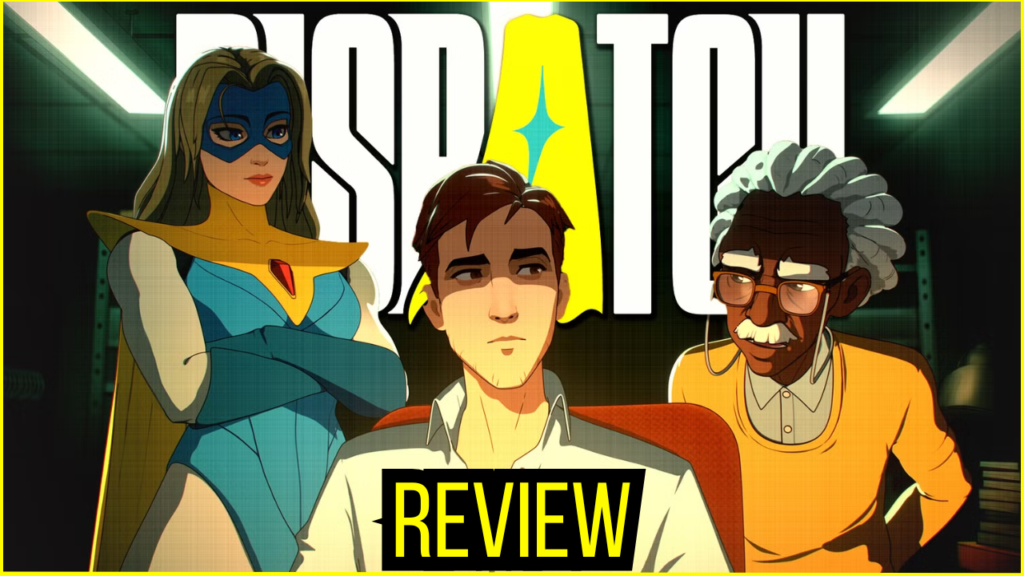
You play as Robert Robertson, a former superhero whose career takes a disastrous turn when his powerful mech suit is destroyed. With his days of personally fighting crime seemingly behind him, Robert accepts a job as a dispatcher for the Superhero Dispatch Network, or SDN. The position initially sounds like a chance to remain connected to the world of superheroics, but Robert soon discovers that his new team isn’t made up of the city’s most celebrated defenders. Instead, he’s tasked with managing the Z-Team, a collection of former supervillains enrolled in a rehabilitation program that gives captured criminals the opportunity to work for SDN rather than remain behind bars.
The setup is immediately entertaining, but what makes Dispatch special is how much more it becomes than a comedy about a dysfunctional superhero workplace. Beneath the jokes, office politics, and ridiculous personalities is a story about second chances, personal responsibility, and people trying to become better versions of themselves. Robert is a fallen hero searching for a new purpose, while his team members are attempting to prove that their past mistakes don’t have to define their futures. Watching these characters gradually find their footing together is the heart of the experience, and it’s what ultimately makes Dispatch so difficult to forget.
Narrative: A Superhero Story With Heart, Humor, and Humanity
From the very first episode, Dispatch had me thinking about the original seasons of Telltale’s The Walking Dead, particularly the way those games made seemingly small decisions feel emotionally significant. The writing immediately drew me into Robert’s story, and the dialogue choices gave me reasons to stop and consider how I wanted him to respond to the people around him. Sometimes that meant deciding whether to be supportive, confrontational, or sarcastic, while other moments forced me to think about how my actions might affect a developing relationship. I was invested early, and the game only strengthened that connection as the episodes continued.
The humor was another immediate highlight. Dispatch has a sharp, sometimes vulgar sense of comedy that reminded me of The Boys and Invincible, balancing superhero spectacle with the kind of messy interpersonal drama you might expect from a workplace comedy. Its characters are allowed to be petty, immature, obnoxious, and occasionally downright awful, which makes their more vulnerable moments feel all the more meaningful. The game understands that superheroes don’t automatically become interesting because they have powers. What matters is the person underneath the costume, including the parts of themselves they’d rather other people never see.
That balance between comedy and emotional storytelling is one of the game’s greatest strengths. One moment, I’m laughing at the team’s ridiculous behavior or a particularly outrageous exchange of dialogue, and the next, I’m watching a character open up about something that makes their attitude or past actions suddenly feel more understandable. The tonal shifts rarely feel forced because the writing gives these characters enough personality to make both sides of their identities believable. They’re funny because of who they are, but they’re also capable of surprising vulnerability because the game never reduces them to a single joke.
I especially appreciated how the story treats the idea of second chances. Robert’s circumstances force him to reconsider what it means to be a hero when he can no longer rely on his old methods, while the Z-Team members are constantly fighting against the expectations attached to their pasts. Their circumstances are different, but they share the challenge of figuring out how to move forward when the people around them have already decided who they are. Dispatch doesn’t pretend that becoming a better person is easy, nor does it suggest that a single good deed can erase years of questionable decisions. Instead, it finds its emotional weight in the smaller steps these characters take toward trusting one another.
By the time I reached the later episodes, I wasn’t simply interested in seeing how the plot would resolve. I wanted to spend more time with these people. That’s a distinction I think matters enormously in narrative games, because a compelling premise can get you through the opening hours, but memorable characters are what make you care about the journey itself. Dispatch gave me a crew I genuinely didn’t want to leave behind, and that’s one of the highest compliments I can give it.
Meet the Z-Team: A Crew of Beautiful Disasters
I fucking love these characters. Every member of Robert’s roster brings a distinct personality to the team, and the writing gives them enough room to be both entertaining and surprisingly human. They’re not a collection of interchangeable superheroes with different costumes and powers. They’re people with egos, insecurities, bad habits, personal baggage, and plenty of reasons to get on one another’s nerves. Their flaws aren’t just obstacles for the story to overcome; they’re part of what makes the group so endearing.
Take the narcissistic, frat-boy energy of some of the team’s members, or Flambé’s arrogant, abrasive personality. Prism brings her own brand of attitude and flashy confidence, while Punch Up’s willingness to throw punches and make jokes at other people’s expense gives him a different kind of comedic appeal. Then there’s Chase, who felt like the kind of coworker and friend everyone hopes to find when they’re surrounded by chaos. These characters could easily have been reduced to a series of familiar superhero stereotypes, but the performances and writing make them feel like people you might actually work with, even if your workplace normally doesn’t involve superpowers, criminal rehabilitation, or the occasional violent incident.
What I love most is that the game doesn’t demand that you find every character immediately likable. Some of these people are genuinely irritating, and others have personalities that would make them exhausting to deal with in real life. But as you spend more time with them, you begin to understand their motivations, recognize their insecurities, and appreciate the little details that make them who they are. Their shortcomings become part of the appeal because they feel like believable flaws rather than arbitrary traits designed to create drama.
The relationship between Robert and the rest of the crew is central to this dynamic. He’s not simply the boss issuing instructions from behind a desk; he’s a person trying to find his own footing while being responsible for a group of people who don’t always make it easy. That creates plenty of opportunities for friction, but it also gives the game room to explore the bonds that form when people are forced to work together. The team’s found-family dynamic is one of the most effective parts of the narrative, and I found myself becoming increasingly attached as the episodes progressed.
The relationship writing extends beyond the broader team dynamic, too. Robert’s interactions with Invisigal and Blue Blazer provide some of the game’s most compelling personal moments, with romantic tension and emotional uncertainty adding another layer to his journey. I particularly enjoyed the way the game lets these relationships develop alongside the central story instead of treating them as distractions from the superhero plot. The will-they-won’t-they elements are entertaining, but they’re also part of a larger exploration of vulnerability, trust, and what it means to let other people get close to you.
By the end, I had become invested in virtually everyone on the roster. I wanted to see these characters succeed, work through their problems, and figure out what their lives might look like beyond the events of the game. That’s why the thought of not getting another season genuinely disappoints me. Dispatch has created a cast I could happily spend much more time with, and I would love to see this world continue through a second season, a sequel, or even an animated adaptation.
The Voice Acting and Animation Are Outstanding
It shouldn’t come as a surprise given the talent involved, but the voice acting in Dispatch is sensational. The performances bring an extraordinary amount of personality to the cast, helping every character feel distinct even when the writing shifts between rapid-fire comedy and more emotionally demanding scenes. The delivery is especially important in a game like this, where so much of the experience depends on dialogue, timing, and the chemistry between characters. A joke can fall flat if the performance doesn’t sell it, and a dramatic moment can feel hollow if the actors can’t convey the emotion underneath the words. Fortunately, Dispatch rarely has that problem.
The cast consistently elevates the material, giving even the most ridiculous exchanges a sense of spontaneity. Characters interrupt, argue, tease, and stumble through conversations in ways that make their interactions feel natural rather than like dialogue waiting for the player to click through. The comedic timing is excellent, but what impressed me even more was the ability of the actors to shift into more vulnerable territory without losing the personalities they’d established. The emotional scenes work because these characters have already been allowed to be funny, frustrating, and deeply imperfect.
The animation is equally impressive. Dispatch adopts a polished, comic-book-inspired visual style that feels right at home alongside contemporary adult superhero animation, particularly Invincible. The characters are expressive, the action has a strong sense of movement, and the cinematic sequences know how to use framing and visual timing to make important moments land. There were times when I genuinely thought the animation was on par with some of the best work I’ve seen on television, and in certain scenes, I was even more impressed by what AdHoc Studio accomplished here than by what I’ve seen in the Amazon series.
That quality matters because the game spends so much of its time asking you to watch characters interact. Strong facial expressions, body language, and well-timed visual reactions make conversations more engaging, while the larger cinematic sequences give the superhero elements the spectacle they deserve. This isn’t simply a visual novel with attractive character portraits and dialogue boxes. The animation gives the cast room to perform physically, allowing their personalities to shine through even when they’re not speaking.
Put the performances, writing, and animation together, and Dispatch becomes an unusually cohesive experience. Each element reinforces the others, creating a game that feels less like a series of dialogue scenes stitched together and more like an animated series you happen to influence. Considering how much I enjoy character-driven storytelling, this is precisely the kind of presentation that makes it difficult for me to put a game down.
Gameplay: Dispatching Heroes Is Surprisingly Addictive
Although the narrative is the main attraction, Dispatch gives players more to do than simply make dialogue choices and watch the story unfold. The gameplay is split across three primary elements: narrative sequences in which you make decisions, a hacking minigame that lets Robert open pathways and bypass obstacles, and the dispatching sections where you send members of the Z-Team to handle incidents around the city. The hacking is relatively simple, but the dispatching system provides a surprisingly engaging layer of strategy that helps make the overall experience feel more interactive.
Each member of the team has five core stats: Combat, Vigor, Mobility, Charisma, and Intellect. As incidents come in, you have to assess the situation and decide which heroes are best suited to handle each one. A mission involving a high-speed chase might call for someone with excellent Mobility, while an encounter involving armed opponents may require a character with strong Combat abilities and enough Vigor to withstand damage. The descriptions provide clues about what each assignment demands, but choosing the right person isn’t always as simple as matching one stat to another.
That’s because the Z-Team isn’t a roster of perfect solutions. Malevola, with her sword and portal-making abilities, is something of an all-rounder, while Coupé brings impressive Combat, Mobility, and Intellect but struggles with Vigor and Charisma. Other heroes have their own strengths and weaknesses, meaning that even a seemingly straightforward assignment can require some thought. You can send multiple characters when a situation calls for a combination of abilities, but doing so means those heroes won’t be available for other incidents while they’re away.
The cooldown system is what makes the dispatching particularly enjoyable. Heroes need time to reach their destinations, complete their assignments, and return to headquarters before they can be sent out again. As the calls pile up, you have to juggle your roster and make decisions based on who is available rather than simply sending your strongest character to every incident. Sometimes the best person for a job is still recovering from the last one, forcing you to improvise with someone who might not be the ideal fit. Those moments can lead to failed calls, but they also create a satisfying sense of pressure as you try to keep everything under control.
The system becomes more engaging as the game progresses. Your early shifts are largely about learning the mechanics and understanding what each character brings to the table, and you’ll probably make a few mistakes along the way. As heroes complete assignments, they gain experience and level up, allowing you to improve one of their stats. That progression gives you a reason to think about which characters you want to develop and how their improved abilities might help with future incidents.
I also appreciated the ability to inspect the team’s information while dispatching. You can look up details such as a character’s age, height, abilities, and powers, which adds another layer of worldbuilding to the experience. These details aren’t necessary to understand the central mechanics, but they make the roster feel more fully realized and give curious players additional insight into the people they’re managing. It’s a small touch, but one that fits the game’s broader commitment to making its characters feel like more than a collection of stats.
Occasionally, a hero will contact Robert when a situation becomes complicated, asking him to help decide how they should proceed. These moments often present a handful of possible responses, with the wording hinting at the skill or approach needed to resolve the problem. Robert can also use his own technical expertise to hack his way around certain obstacles. These interactions provide a nice change of pace from the regular dispatching loop, letting you feel involved in incidents even when you’re not physically present in the field.
The gameplay isn’t especially deep compared with a dedicated strategy game, but it doesn’t need to be. Its job is to complement the narrative, and it does that well. The dispatching sections give you something to think about between major story beats, reinforce the idea that Robert is learning to lead a dysfunctional team, and create small moments of tension when you’re forced to make do with an imperfect choice. I found myself genuinely enjoying the process of figuring out who should handle each assignment, and that mechanical layer helped make the world feel more interactive than a purely cinematic adventure would have.
The Illusion of Choice
For all the praise I have for Dispatch, there is one area where it doesn’t entirely live up to the expectations of its Telltale-inspired design: the long-term impact of your choices. The game frequently presents you with decisions that appear to carry substantial consequences, and it isn’t shy about reminding you that characters will remember what you say or do. Those moments can make every conversation feel significant, especially when you’re deciding how Robert should handle a difficult situation or navigate one of his relationships.
However, the overall story follows a fairly fixed direction regardless of which options you choose. Some decisions change particular scenes, affect which characters appear in certain moments, or determine how specific relationships develop, but the central narrative remains largely intact. The game is more interested in letting you shape the texture of the story than in giving you the ability to completely redirect it. If you’re expecting something like Baldur’s Gate 3, where major choices can dramatically alter the direction of the adventure, you’ll need to adjust those expectations.
One of the clearest examples comes early in the story, when Robert is instructed to remove the team member who performs worst on the leaderboard. The decision appears to invite you to influence the outcome by improving certain characters’ performance, refusing to cooperate, or deliberately sending other heroes into situations where they might fail. Yet the game ultimately funnels you toward choosing between two specific candidates, regardless of how much effort you put into manipulating the rankings. The scene still has emotional weight because of the characters involved, but the underlying choice is more constrained than the presentation initially suggests.
I don’t necessarily think a fixed narrative is a problem in itself. Some of the best story-driven games are built around a carefully controlled sequence of events, and Dispatch benefits from the quality of its writing and the way its characters develop along that path. A more branching story would also require significantly more content and could make it harder to maintain the same level of narrative focus. Still, I would have appreciated a little more room for decisions to meaningfully affect the overall journey, particularly when the game goes out of its way to emphasize their importance.
That said, I was rarely disappointed enough by the limitations to stop caring about the decisions themselves. The dialogue choices are often entertaining in their own right, and the characters’ reactions provide immediate feedback that makes the conversations engaging even when the long-term ramifications are limited. I enjoyed deciding how Robert would respond to his colleagues, which relationships he would pursue, and how he would approach the challenges of leading the Z-Team. The game may not offer the same degree of freedom as some larger role-playing adventures, but it gives you enough room to personalize Robert’s journey that I remained invested in the experience.
The Little Things That Make the Experience Special
One of my favorite features in Dispatch is the way it presents the community’s choices after each episode. Once an episode concludes, the game shows you how your decisions compare with those made by other players, revealing whether you went with the majority or took a less popular route. It’s a simple idea, but it adds a surprisingly effective social dimension to a single-player game.
Sometimes, I wanted to know whether other players had made the same decision I did. Did everyone feel the same way about a particular romantic moment, or was I in the minority for deciding not to pursue it? How many people responded to a tense conversation with a joke instead of taking the more serious route? These statistics don’t change the story, but they encourage you to reflect on your own choices and compare your interpretation of a situation with the wider audience.
That feature fits especially well with Dispatch because so much of its appeal comes from the characters and the relationships you build with them. When you’ve become invested in a particular character, seeing how other players responded to their scenes can be an interesting way to revisit the decision in your head. It’s a clever way of making a solitary narrative experience feel like part of a larger conversation without sacrificing the intimacy that makes these games work.
The game’s smaller worldbuilding details also deserve credit. Being able to inspect character profiles, learn more about their powers, and discover information about the team adds texture to the world. Combined with the excellent performances and animation, those details make the Z-Team feel like an actual group of people whose lives extend beyond the scenes we happen to witness. I love when a game gives me reasons to linger in its world even when doing so isn’t strictly necessary to finish the story.
Playing Dispatch on Steam Deck
I played Dispatch on the Steam Deck, and it was a fantastic fit for the handheld. The game’s comic-book-inspired art style and cinematic cutscenes look excellent on the smaller screen, and its emphasis on dialogue and character interaction lends itself naturally to a more relaxed, portable experience. Rather than needing to sit down for a demanding action sequence, I could settle in and enjoy the next chapter of the story wherever I wanted.
The dispatching sections also work well in the context of a handheld play session. They’re engaging enough to break up the narrative sequences, but they don’t demand the kind of constant precision that might make a more action-heavy game uncomfortable to play on the go. Combined with the game’s strong visual presentation, the Steam Deck made it easy to become absorbed in the characters and their world. I had an excellent experience playing this way, and it was a great platform for a game that I frequently wanted to keep playing just to see what happened next.
Pros
An outstanding cast of characters brought to life through exceptional voice acting, gorgeous animation, and a story that balances sharp comedy with genuine emotional depth.
Cons
Many choices have less impact on the overall story than they initially suggest, and the gameplay lacks the depth of a dedicated strategy experience.
Is This a Good Single Player Experience?
Absolutely. Dispatch is a phenomenal example of how strong writing, memorable characters, and thoughtful presentation can make a narrative-driven game feel special even when its mechanics are relatively simple. The dispatching system adds a welcome layer of strategy, while the dialogue choices give you opportunities to shape Robert’s personality and relationships. The voice acting and animation are exceptional, and the story balances ridiculous superhero comedy with genuine emotional weight.
The limited impact of some decisions is worth keeping in mind, particularly if you’re looking for a branching narrative where your choices can dramatically change the overall plot. But Dispatch succeeds at something just as important: making you care about the people living through that story. I wanted to see these characters grow, I wanted to understand what made them tick, and I wanted to spend more time with them long after I had finished the game.
For fans of superheroes, character-driven stories, and the classic Telltale style of adventure, this is an easy recommendation. It feels like a natural evolution of the narrative games I loved a decade ago, bringing that familiar structure together with a fresh premise, outstanding animation, and a cast that is almost impossible not to get attached to. Dispatch reminded me why I fell in love with story-driven games in the first place, and that’s something I don’t take lightly.
Dispatch is an outstanding narrative adventure that combines superhero comedy, heartfelt character development, and a surprisingly engaging dispatching system into one of the most memorable single-player experiences I’ve played in a long time. Its cast is exceptional, its animation is frequently stunning, and its story explores second chances and found family without losing sight of the ridiculous fun that makes the superhero genre so appealing. Although the overall narrative is more fixed than some of its choices initially suggest, the characters are so well written and performed that I remained deeply invested in their journey from beginning to end.
The gameplay isn’t especially complex, but the dispatching mechanics provide enough strategy to keep you involved between story sequences, and the hacking minigames offer some welcome variety. More importantly, the game understands that its greatest strength is the people at its center. I wanted to know what would happen to Robert and the Z-Team, and by the time I finished, I wasn’t ready to say goodbye to them. The fact that I found myself thinking about the game for nights afterward speaks volumes about how much its story resonated with me.
For someone who grew up loving superheroes and spent years enjoying narrative adventures in the style of Telltale, Dispatch feels like a dream project brought to life. It delivers the kind of character-driven storytelling that made me fall in love with this medium, while bringing enough of its own personality to stand apart from the games that inspired it. I can easily see it becoming one of my favorite games of all time, and I sincerely hope this isn’t the last time we get to spend time with this crew.
Why This Passion Score?
My Passion Score reflects just how much Dispatch connected with me on a personal level. Superheroes have been part of my life since childhood, and I’ve always been drawn to stories that explore the people behind the costumes as much as the powers they possess. Growing up with Marvel comics gave me an appreciation for flawed heroes, complicated relationships, and characters who have to learn that doing the right thing is rarely as simple as punching the bad guy. Dispatch understands those themes, but it also brings a fresh perspective by focusing on a group of former villains who are trying to figure out whether they can become something better.
I fell in love with the entire crew. Their personalities, their shortcomings, their relationships, and their moments of vulnerability made them feel like people I genuinely knew. The writing had me laughing one moment and emotionally invested the next, while the voice acting and animation gave every interaction a sense of life that few games manage to achieve. I found myself thinking about the characters even after I had finished playing, and on multiple nights, I caught myself dreaming about the game and wondering what might happen to them next. That kind of lasting connection is rare, and it’s one of the clearest signs that a story has really gotten under my skin.
What makes Dispatch special is that it feels like a modern continuation of the narrative adventures that first made me fall in love with this style of gaming, only with the benefit of excellent animation, outstanding performances, and a superhero setting that speaks directly to my interests. I would be genuinely disappointed if AdHoc Studio never returned to this world. Whether it’s a second season, a sequel, or an animated adaptation, I want more of these characters, and I want to see where their lives take them next. Few games leave me feeling that way, and Dispatch is one of the rare ones that makes the desire for more feel almost immediate.