
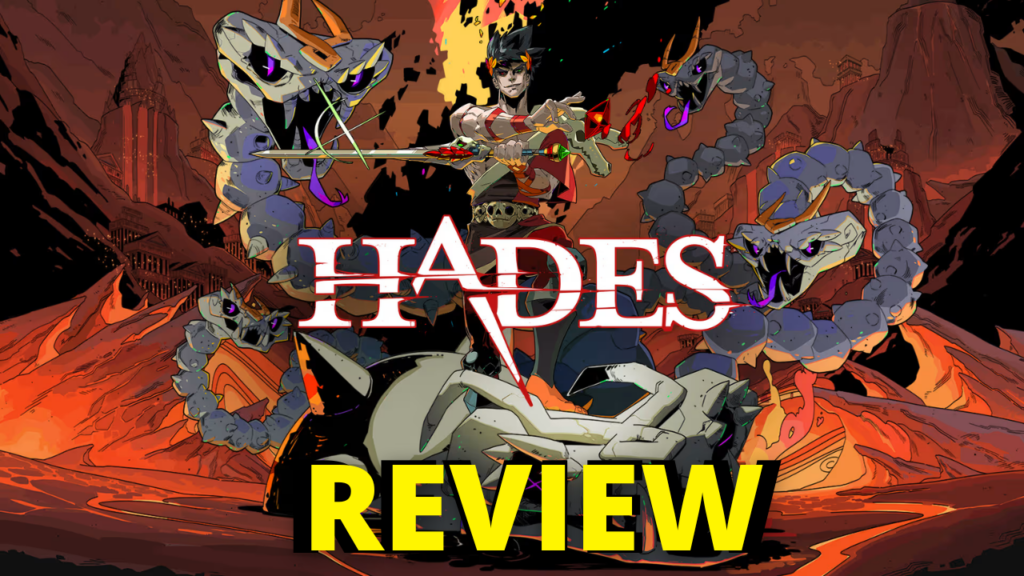
Intro/ Set The Scene
My first experience with a Supergiant Games title was Bastion, a game I absolutely loved at the time but didn’t necessarily spend much time thinking about after I finished it. Hades, on the other hand, is a completely different story. This game didn’t just impress me; it slapped me upside the head, hit me with a DDT, followed it up with the People’s Elbow, and then finished me off with a Swanton Bomb and a frog splash. What I’m trying to say is that Hades caught me completely off guard and proceeded to blow me away over and over again, like a WWE superstar who refuses to finish a match after one devastating move.
Going into Hades, I was well aware of the conversation surrounding it. I follow outlets like Kinda Funny and IGN’s Game Scoop, and it seemed like everywhere I turned, people were talking about this game as the next big breakout success. It had spent time in Early Access, the buzz was building, and the world was in the middle of a pandemic that had already made everything feel a little upside down. I decided to hold off and see whether this was one of those games that dominated the conversation for a week before disappearing into the background. Well, that didn’t happen. People kept talking about it, the praise continued, and eventually I watched a trailer and thought, “Oh, that shit looks fun.”
When the game arrived on Xbox and PlayStation consoles in August, I decided to take the plunge. I was between games, looking for something I could really sink my teeth into, and figured this would be a good opportunity to see what all the fuss was about. That decision turned into a month-long obsession with trying to escape Hell. I didn’t just enjoy Hades; I became completely consumed by it, and playing it I knew that this game was changing who I was as a gamer.
Narrative
A Family Drama Worth Dying For
As much as I love the combat, the art direction, and the sheer replayability of Hades, my favorite aspect of the game is its storytelling. This is a genuinely excellent character-driven adventure, and I don’t think the narrative gets enough credit when people talk about what makes the game so special. The story follows Zagreus, the Prince of the Underworld, who has grown increasingly desperate to escape the cold and unyielding household ruled by his father, Hades. Zag has spent much of his life believing that Nyx, the goddess of night, is his birth mother, but after uncovering hidden records, he discovers that his actual mother is Persephone, the former Queen of the Underworld who mysteriously left for the surface world years earlier.
Determined to discover why Persephone left and whether she’s still alive, Zag decides to fight his way out of the Underworld. His journey takes him through Tartarus, Asphodel, and Elysium before he can reach the surface. Along the way, the Olympian gods offer their assistance, largely unaware of the circumstances surrounding Persephone’s departure, while Hades desperately attempts to keep the truth hidden. He views the Olympians as vain hypocrites and fears that revealing Persephone’s whereabouts could create a conflict between Olympus and the Underworld. What initially appears to be a straightforward story about a rebellious son trying to escape his father’s control gradually develops into a much more intimate story about family, resentment, grief, and reconciliation.
The really impressive part is how the game delivers that narrative. You need to complete ten successful escapes to uncover the full story, which might sound like a substantial commitment if you’re expecting a traditional campaign with a beginning, middle, and end. But I genuinely enjoyed the entire journey because the game understands that the story isn’t something you experience only when you’re moving toward the final boss. It’s happening throughout every attempt, in every conversation, and in the relationships you build with the characters waiting back at home.
I’m typically someone who likes narratives spoon-fed to me. Give me the cinematic cutscenes, the carefully directed character interactions, and the big emotional moments. I’m the guy sitting in the booster chair with a bib on, waiting for the next serving of story. Games like Uncharted, God of War, and Red Dead Redemption appeal to me because they deliver their narratives through a more traditional, directed approach. Hades is one of the rare games that convinced me just how effective a different approach can be.
There’s a little bit of that Dark Souls approach to storytelling here, where you learn about the world and its characters through conversations, environmental details, and smaller pieces of information revealed over time. But Hades combines that approach with more traditional character writing and voice acting, creating something that feels much more accessible without sacrificing its depth. You’re constantly learning something new about the people around you, and those conversations give you reasons to care about returning to the House of Hades beyond simply upgrading your character.
The voice acting deserves particular recognition because it brings so much personality to the cast. These characters aren’t just mythological figures delivering exposition; they have recognizable personalities, complicated relationships, and plenty of little quirks that make them feel like actual people. Even after repeated attempts to escape, conversations continue to evolve, and the game finds ways to introduce new details that make the world feel alive. It’s an incredibly effective way to tell a story in a game built around repetition, and it turns what could have been a mechanical necessity into one of the experience’s greatest rewards.
Gameplay
Welcome to the Underworld
You play as Zagreus, the Prince of the Underworld, although I prefer to call him Zag because we’re homeboys at this point. Not that we know each other personally, but after spending that much time trying to help the man escape his father’s house, I think we’ve earned the familiarity. Hades is a fast-paced, isometric roguelike dungeon crawler in which Zag fights his way through the shifting chambers of the Underworld, hoping to reach the surface and discover the truth about his family. The premise is straightforward, but the combat system that supports it is anything but ordinary.
Each encounter gives you access to a primary weapon attack, a secondary special attack, a ranged Cast ability, and one of the most satisfying dash mechanics I’ve experienced in an action game. That dash grants temporary invulnerability, making it an essential part of both your offense and defense. Learning when to dash through an attack, reposition yourself, or get behind an enemy becomes second nature, and the combat develops a rhythm that makes even the most chaotic encounters feel incredibly satisfying. The controls are responsive, the animations are fluid, and there’s a wonderful sense of momentum to the way Zag moves through each room.
You begin with the Stygian Blade, but that’s only the first of six Infernal Arms available throughout the game. As you collect keys during your runs, you unlock additional weapons that fundamentally change how you approach combat. There’s the Aegis Shield, which can be thrown for ranged attacks and used defensively; Coronacht, the Heart-Seeking Bow, which lets you pick enemies off from a distance; Varatha, the Eternal Spear; Malphon, a pair of armored fists that turn Zag into a Greek mythology-inspired prizefighter; and Exagryph, the Adamant Rail, a weapon that feels like an ancient Greek interpretation of a machine gun.
What I appreciate about these weapons is that they aren’t simply variations of the same combat style. Each one encourages a different approach, and their effectiveness can change dramatically depending on the boons you collect. I initially found myself disliking the shield, but after landing the right combination of upgrades, I discovered that it could become an absolute force of nature. That’s one of the game’s greatest strengths: even when you’re handed a weapon you don’t particularly enjoy or a collection of boons that isn’t necessarily what you wanted, there’s always the possibility that the right combination will turn an average run into something special. I never felt like a run was automatically a waste of time because I didn’t get the upgrades I was hoping for. Every attempt carried the possibility that this might finally be the one where I escaped Hell.
The Gods Are in the Details
You can’t talk about Hades without talking about its boons. Throughout your escape attempts, the Olympian gods offer upgrades that can dramatically change your abilities, attacks, and overall combat strategy. The nine primary Olympians include Zeus, Athena, Poseidon, Aphrodite, Artemis, Ares, Demeter, Hermes, and Dionysus, with Chaos and Hermes also offering their own unique assistance along the way. These characters aren’t simply vendors handing out stat improvements, either. They’re personalities with distinct voices, motivations, and relationships, and the fact that several of them are voiced by familiar Supergiant contributors is a wonderful touch.
Each god has a particular specialty, and understanding those strengths is essential to building an effective run. Zeus focuses on lightning damage, allowing your attacks to chain electricity between enemies, while Poseidon offers abilities built around water and knockback. Athena’s Deflect abilities were especially useful for me because they allow you to turn enemy projectiles and attacks back against them when you time your movements correctly. Demeter introduces Chill, slowing enemies down and making it easier to control the battlefield, while Ares brings Doom, a damage effect that punishes enemies after a short delay. Aphrodite was something of a sleeper hit for me, as her Weak effect reduces the damage enemies deal to you and can make a meaningful difference when you’re dealing with particularly aggressive opponents. Artemis increases your critical-hit potential, while Hermes provides movement and utility upgrades that can make Zag feel considerably faster and more responsive.
Chaos is an entirely different proposition. Rather than simply offering you an upgrade, Chaos presents a bargain: accept a temporary disadvantage for a few chambers in exchange for a potentially powerful reward once you’ve survived the penalty. You might take additional damage whenever you attack or lose access to an ability for a limited time, but the eventual payoff can make the risk worthwhile. These decisions add another layer of strategy to the experience because you’re constantly weighing the immediate danger against the long-term benefits of your build.
Then there are Duo Boons, which might be my favorite part of the entire upgrade system. These rare abilities combine the powers of two different Olympian gods, creating effects that can completely transform the way you approach a run. They’re especially satisfying because the game doesn’t treat them as simple mechanical combinations. The gods have their own relationships and personalities, so their dialogue often reflects whatever disagreement, rivalry, or flirtation is happening between them before they offer you their shared power. It gives the upgrade system a little more character while making the reward itself feel genuinely special.
Some of these combinations are ridiculous in the best possible way. Sea Storm, for example, combines Poseidon’s knockback with Zeus’s lightning, causing lightning strikes whenever you knock enemies away. Smoldering Air, a combination of Aphrodite and Zeus, rapidly charges your God Gauge so you can unleash your Call ability far more frequently. Hunting Blades, which combines Ares and Artemis, transforms your Cast into a tracking blade rift that hunts down enemies and deals damage without requiring you to constantly remain in their immediate vicinity. These aren’t minor improvements to an existing build; they’re the kinds of upgrades that make you rethink your entire approach to combat.
The beauty of this system is how many different combinations are possible. You can enter a run with a particular weapon and an idea of what you want to accomplish, only to find yourself building something completely different based on the gods who decide to help you. There’s enough variety here to make experimentation feel worthwhile, and the game does an excellent job of making you feel like you’re discovering something new even after dozens of attempts.
The Most Addictive Gameplay Loop in the Underworld
The central gameplay loop in Hades is deceptively simple. You choose a weapon, prepare your build, and begin another attempt to escape the Underworld. Each region consists of a series of chambers filled with enemies, and clearing those encounters rewards you with resources, upgrades, or other benefits. The doors leading out of each room display the reward waiting on the other side, which means you’re constantly making decisions about what you want to prioritize. Do you take another god’s boon to strengthen your current build, collect currency to spend at the next shop, gather resources to improve your character back at home, or pursue a gift that might help deepen your relationship with someone?
That decision-making is what makes the loop so compelling. You’re rarely just moving from one fight to another without considering what comes next. Every reward has a purpose, and choosing one means potentially giving up something else. You might need a particular boon to complete a build, but the currency behind the other door could help you purchase an item that saves your run later. The game constantly presents these small strategic decisions, and they make even the more routine chambers feel meaningful.
There’s also an important distinction between the upgrades you receive during a run and the progression you carry back to the House of Hades. The boons and most of the money you collect are temporary, meaning you lose those advantages when an escape attempt ends. Other resources can be used to permanently improve Zag’s abilities, unlock new options, and make future attempts more manageable. This gives every run a sense of forward momentum, even when you don’t make it very far. You’re either strengthening your character, unlocking new possibilities, developing relationships, or learning more about the world.
And when you die, you don’t simply restart at the beginning of a level with nothing to show for your efforts. Zag returns to the House of Hades, where you can speak with characters, spend resources, make upgrades, and prepare for another attempt. The structure is practically a physical manifestation of the roguelike gameplay loop, but Supergiant understands how to make repetition feel like progression rather than punishment. You’re always working toward something, whether that’s a stronger character, a new weapon aspect, a new conversation, or simply another opportunity to put together the perfect build.
This is where I think Hades separates itself from a lot of other games in the genre. In many roguelikes, the primary reward is the satisfaction of surviving another run and collecting whatever loot comes afterward. In Hades, I’d argue that experiencing more of the story and spending time with its characters is just as important as the mechanical rewards. The narrative and the gameplay are operating on equal footing, and both give you a reason to keep coming back. As someone who places a lot of value on storytelling, that combination is incredibly important to me.
A Masterclass in Art Direction
One of my favorite aspects of Hades is its art direction. Supergiant’s creative director, Jen Zee, and the art team have created something that is immediately recognizable, blending hand-drawn comic-book aesthetics with classical Greek mythology and a distinctly modern visual identity. The character designs are striking, the illustrations are packed with personality, and the use of heavy ink lines and contrasting light and dark elements gives the entire game a sense of visual cohesion. As someone who loves anime and stylized character designs, this was absolutely my kind of thing.
The color palette is particularly impressive because the game uses its environments to establish distinct moods and identities. The House of Hades has a regal, imposing atmosphere, with reds and golds reinforcing the sense that you’re standing inside the home of the Underworld’s ruling family. As you venture further into the Underworld, the environments shift into more unsettling greens, deep reds, purples, and muted earth tones. Each region feels visually distinct, and the colors help communicate the atmosphere of the place without needing to explain everything through dialogue.
There’s a deliberate quality to the way these visual elements work together. The character illustrations, environmental details, and lighting all reinforce the game’s themes of divinity, decay, family, and conflict. It’s the kind of art direction that gives a game an identity you can recognize almost immediately. I can look at a screenshot from Hades and know exactly what I’m looking at, and that’s a pretty remarkable achievement. This is legitimately one of those games where I can look at the screen and think, “That’s the Hades art style.”
A Soundtrack That Knows When to Turn Up the Heat
The soundtrack is another major part of what makes Hades such a memorable experience. The music is dynamic, responding to what’s happening around you rather than simply playing the same track from beginning to end. You might enter an area with a softer, atmospheric melody playing in the background, only for the drums and bass to kick in once enemies appear. When a particularly dangerous encounter begins or your health gets dangerously low, the music can layer in additional intensity, including some wonderfully aggressive electric guitar work that makes you feel like Hell is about to break loose.
What I love about the soundtrack is the way it blends ancient Greek-inspired instrumentation with modern rock and metal influences. You’ll hear softer acoustic arrangements that feel appropriate for the mythological setting, with strings and other instruments establishing a Mediterranean atmosphere. Then those sounds collide with heavy electric guitars, driving percussion, and bass lines that bring an entirely different kind of energy to the experience. On paper, those styles shouldn’t necessarily fit together as naturally as they do, but the soundtrack makes the combination work beautifully.
It’s almost like peanut butter and jelly: two things that you might not immediately expect to complement one another, but once they’re together, you understand why they belong. The music doesn’t just provide a backdrop for the action; it actively contributes to the rhythm and intensity of the combat. It’s one more example of how thoughtfully Supergiant approached every aspect of this game.
Pros
Hades brings together some of the most satisfying action combat I’ve experienced in a roguelike, a remarkably flexible upgrade system, and a gameplay loop that makes repeated attempts feel consistently rewarding. The six Infernal Arms offer genuinely different play styles, while the Olympian boons and Duo Boons create an enormous amount of room for experimentation. Its character-driven storytelling is every bit as compelling as its combat, supported by sensational voice acting and a cast that becomes more interesting the longer you spend with them. Add in the striking art direction and an excellent soundtrack, and you have a game that feels meticulously crafted from top to bottom.
Cons
It’s difficult for me to identify any meaningful shortcomings in Hades that would substantially detract from the experience. The requirement to complete multiple successful escapes before reaching the full conclusion could sound intimidating to players who aren’t accustomed to roguelikes, and the repetition inherent to the genre won’t appeal to everyone. However, I never found those elements to be significant problems because the game consistently gives you new reasons to return, whether through character interactions, progression, or the possibility of discovering another powerful build. The structure is fundamental to what makes Hades work, and I wouldn’t want to remove it.
Is This a Good Single Player Experience?
Absolutely. In fact, Hades is one of the best examples of what a single-player game can accomplish when its narrative and gameplay systems are designed to complement one another. The combat is engaging enough to stand on its own, but the characters, relationships, and unfolding family drama give every run a greater sense of purpose. You’re not simply repeating the same series of encounters in pursuit of a better score or a more powerful character; you’re returning to a world that continues to reveal more of itself the longer you spend there.
What makes the experience especially impressive is that it doesn’t sacrifice storytelling to accommodate its roguelike structure. Instead, Supergiant uses that structure as an opportunity to develop its characters and narrative in ways that a more traditional adventure might not. Every return to the House of Hades is another opportunity to discover something new, and every escape attempt feels like another chapter in Zag’s journey. For a player who values strong characters, meaningful storytelling, and satisfying gameplay, Hades is about as good as it gets.
Hades is a masterpiece of game design, storytelling, and replayability. Supergiant Games has created an experience where every element feels like it belongs, from the responsive combat and endlessly entertaining boon combinations to the characters and family drama that give the journey its emotional weight. It’s the rare game that can make you excited to die because you know there’s another conversation waiting for you back home, another upgrade to unlock, and another opportunity to discover something you haven’t seen before. I went into Hades expecting to find a really good roguelike, and I walked away with one of my favorite games of all time. This is a game I will keep installed for years, and I have absolutely no intention of ever letting it escape my library.
Why This Passion Score?
A 91 Passion Score reflects just how much Hades means to me, both as an individual experience and as a game that helped shape my current tastes. This was one of the titles that introduced me to the kind of roguelike and roguelite experiences I would eventually become obsessed with, and it helped establish the standard against which I measure other games in the genre. Alongside Rogue Legacy 2, it played a significant role in turning me into the roguelike sicko I am today. I love experimenting with builds, discovering new combinations, and finding reasons to jump back into a game even after I’ve already seen most of what it has to offer.
But my connection to Hades goes beyond the genre itself. I adore its characters, its storytelling, its art direction, and the way its world makes me want to spend more time in it. This is one of those rare games that I genuinely cannot imagine not having in my library. I’m increasingly finding myself with a collection of what I would call forever games: titles I want to keep installed because I know there will always be a moment when I feel like returning to them. Hades is absolutely one of those games. Whether I’m playing on my Xbox or Steam Deck, I can jump in, start another run, and enjoy the experience without needing to commit to another lengthy campaign. I don’t know exactly where it lands among my favorite games of all time, but I know it’s up there, and that’s enough to tell you how much I love it.