Intro/ Set The Scene
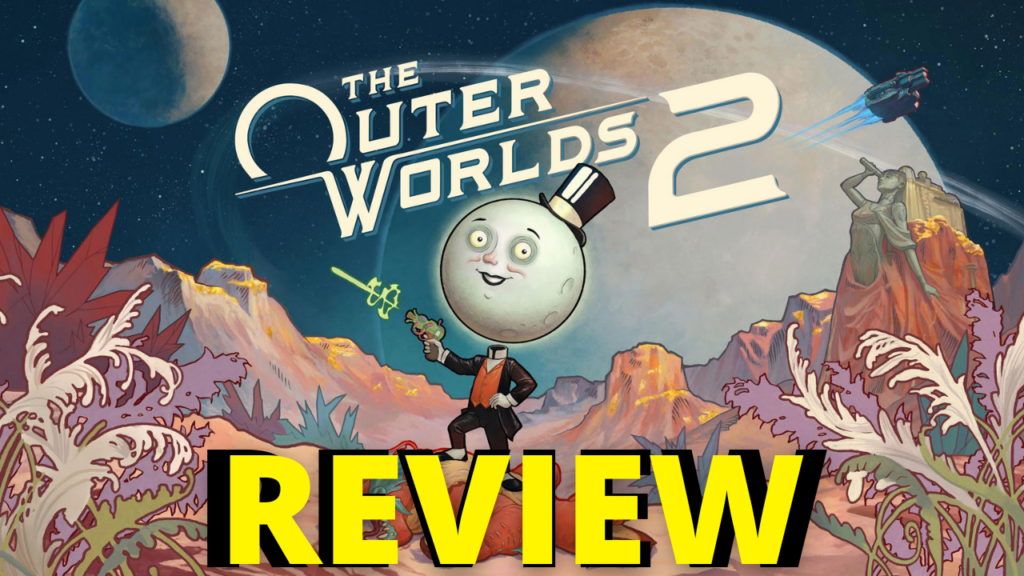
I really wanted to love The Outer Worlds 2. I mean, I really wanted to love this game. When the original The Outer Worlds was announced, I thought Obsidian had stumbled onto a winning formula. Take the freedom and role-playing systems of something like The Elder Scrolls IV: Oblivion, throw it into a science-fiction universe, add a healthy dose of corporate satire, and give players a galaxy to explore. As someone who loves science fiction, Star Wars, Dune, Mass Effect, and the Fallout games, I figured this was practically guaranteed to become one of my favorite RPG franchises.
Then I played the first game. And played it again. And again. I attempted to get into The Outer Worlds four separate times, each time convinced that maybe I was approaching it incorrectly. Perhaps I needed to play more aggressively instead of leaning into stealth. Maybe I needed to approach the story differently or give the game more time to establish itself. Whatever the reason, I never managed to sink my teeth into it. I kept walking away feeling like I was missing something everyone else seemed to enjoy.
So when The Outer Worlds 2 came around, I was cautiously optimistic. Maybe Obsidian had refined the formula, improved the combat, created more interesting characters, and delivered a story that would finally pull me into this universe. I wanted the sequel to be the game that made everything click, the one that finally turned me into a fan of the franchise.
And, to its credit, The Outer Worlds 2 initially gave me every reason to believe that might happen. The opening sequence is engaging, the premise immediately grabs your attention, and the game establishes its world and central conflict with an urgency that I appreciated. For the first time in my experience with this franchise, I found myself genuinely excited to see what happened next.
Then I reached the first major area, the pace slowed to a crawl, and I started wondering when the game was going to become interesting again. After roughly 10–12 hours, I found myself struggling to care about the story, the side quests, or the world I was supposed to be exploring. I wanted to enjoy my time with The Outer Worlds 2, but I kept finding myself wishing I were playing something else.
This is a game with plenty of ideas, and I can see the appeal of what Obsidian has created. Unfortunately, for the second time with this franchise, I couldn’t turn that potential into a genuinely enjoyable RPG experience.
Set the Scene
The Outer Worlds 2 puts you in the role of an Earth Directorate agent sent to investigate dangerous space-time rifts caused by malfunctioning skip-drive technology. Your assignment takes you to the Arcadia system, a colony caught between competing political and ideological factions while a much larger crisis threatens the region.
The setup is immediately appealing. You’re not simply another adventurer looking to make a name for yourself. You’re an agent tasked with investigating a potentially catastrophic situation, and the game gives you a reason to care about what happens before you have even settled into the broader RPG experience.
The Arcadia system is divided between Auntie’s Choice, a corporate power born from the merger of two familiar companies from the first game; the Protectorate, an authoritarian interpretation of collectivism; and the Order of the Ascendant, a religious organization that approaches the universe through mathematics and scientific doctrine. Each faction has its own worldview, and the resulting conflict gives Obsidian plenty of material to explore.
The opening sequence does a good job of establishing those stakes while introducing the game’s mechanics. It is brisk, story-focused, and packed with enough interesting encounters to make me curious about the world. Rather than spending hours waiting for the plot to get moving, I was thrown into a situation that demanded my attention.
I was particularly encouraged by how naturally the game introduced its systems. The opening didn’t feel like an extended tutorial that kept stopping the action to explain every mechanic. Instead, the gameplay and storytelling worked together to establish the experience, and by the time the title screen appeared, I was ready to see where the adventure would take me. Then the game opened up. I don’t mean that the transition to larger environments is inherently a problem. In fact, I generally enjoy RPGs that give players room to explore, stumble across unexpected encounters, and discover stories that aren’t necessarily marked on a map. The problem is that the first major area of The Outer Worlds 2 never maintained the momentum established by the prologue.
The environments looked promising from a distance, but once I started exploring, I found many areas disappointingly empty. The visual presentation wasn’t particularly impressive, either. Although there are attractive landscapes and some interesting science-fiction designs, I rarely felt that the environments themselves were compelling enough to make me want to explore them.
More importantly, the game struggled to make exploration feel worthwhile. I kept encountering side quests and points of interest, but too many of them felt like additional tasks rather than discoveries that made me more invested in the setting.
That distinction is important for a game like this. A sprawling RPG can ask players to spend dozens of hours in its world, but it needs to give them compelling reasons to do so. Whether that’s fascinating lore, memorable characters, unexpected encounters, or an unfolding mystery, something needs to keep pulling you forward. After its excellent opening, The Outer Worlds 2 struggled to do that for me.
Narrative
The narrative was the biggest disappointment of my experience, especially because story-driven RPGs are usually right in my wheelhouse. One of my favorite things about games like Mass Effect and Baldur’s Gate 3 is how they encourage you to become invested in their characters. I want to learn about my companions, understand their motivations, and see how their personal stories develop alongside the main narrative. I want conversations to reveal something meaningful about the world or the people inhabiting it. Most importantly, I want my decisions to feel like they matter.
The Outer Worlds 2 has the foundation for that kind of experience. Your character’s background and decisions influence the story, and the game gives you opportunities to approach situations through diplomacy, stealth, combat, and other role-playing approaches. The factions have competing philosophies, and the central conflict creates opportunities for Obsidian to examine the consequences of different political and social systems. But having the ingredients for an interesting story isn’t the same as delivering one.
The prologue initially convinced me that the narrative was going to be one of the game’s strongest elements. I was interested in the space-time rifts, intrigued by the situation in Arcadia, and curious about how the competing factions would respond to the growing crisis. Unfortunately, that initial excitement gradually faded as I moved through the wider game.
The side quests were a particular problem. I completed several, hoping to find the kind of memorable character moments or fascinating world-building that can make an RPG’s optional content feel essential. Instead, too many of these missions felt like chores that I was completing because the game had placed them in front of me. That doesn’t mean every quest is poorly written or that the game lacks worthwhile moments. There are glimpses of the sharp writing and irreverent humor Obsidian is known for, and the setting offers plenty of opportunities for interesting storytelling. The problem is that those moments didn’t consistently translate into a larger experience that kept me invested.
I also struggled to connect with the characters and companions. The ability to recruit companions with their own backgrounds, personalities, and goals is a major part of the game’s appeal, but I never developed the attachment I wanted. I kept thinking about the relationships I had formed with characters in Mass Effect or Baldur’s Gate 3 and wondering why this game’s cast wasn’t having the same effect on me.
Those comparisons aren’t necessarily fair to every RPG, but they’re relevant to what I want from the genre. When a game encourages me to invest dozens of hours in a fictional world, I want the people in that world to matter to me. I want to be curious about their pasts, care about their futures, and feel something when their stories reach a conclusion.
I never reached that point with The Outer Worlds 2 during my time with it. The result is a narrative experience that feels strangely disconnected from the very things that should make it compelling. There is an interesting premise, an elaborate setting, and plenty of opportunities for role-playing, but the story and its characters never gave me a strong enough reason to care about any of it.
Gameplay
Mechanically, The Outer Worlds 2 is still recognizable as a first-person RPG. You explore large, self-contained regions, complete quests, interact with characters, improve your abilities, collect equipment, and fight your way through hostile encounters. You aren’t exploring one seamless open world; instead, the adventure is spread across distinct areas with their own points of interest and objectives.
I created a character who leaned toward gunslinging, stealth, and persuasion. I wanted to play a generally good-hearted agent who could talk his way through situations when possible but wasn’t afraid to pick up a weapon when diplomacy failed.
That approach gave me several ways to handle encounters, which is something I appreciate in a role-playing game. A character built around conversation should feel different from one focused on combat, and stealth should offer an alternative to simply charging into every room with guns blazing.
Unfortunately, the broader gameplay loop never became particularly compelling to me. Combat offers a variety of weapons, and their different effects provide some room for experimentation. However, weapon effectiveness is tied to your character’s skill development, which means your build can significantly influence how effective you are in a firefight. That makes sense for an RPG, but the shooting itself never felt satisfying enough to carry the experience when the narrative and exploration weren’t holding my attention.
I wasn’t looking for a dedicated first-person shooter, but I did want combat that made the journey between story beats enjoyable. Instead, firefights often felt like something I needed to get through before returning to the parts of the game I hoped would be more interesting.
Unfortunately, those other parts weren’t consistently delivering, either. The skill system also reflects Obsidian’s attempt to make character specialization more meaningful. Rather than allowing your character to become proficient in practically everything, the game encourages you to commit to particular strengths. That can make character creation and progression more interesting because your choices establish what your protagonist can and cannot do.
I appreciate that philosophy. A role-playing game should give you reasons to think about your build and encourage you to approach situations in ways that suit your character. Still, a well-designed progression system can only do so much when the activities you’re progressing through aren’t particularly enjoyable.
One aspect I did appreciate was the return of flaws. These optional drawbacks introduce disadvantages alongside benefits, creating opportunities to make your character more distinctive. A flaw that changes how you approach conversations or imposes a restriction on your usual behavior can be an interesting role-playing twist, particularly when it encourages you to think differently rather than simply handing you another generic upgrade.
The companion system also adds some welcome considerations to exploration. You can recruit multiple companions and bring two with you into the field, allowing their abilities and personalities to complement your approach. Their allegiances can also influence how you handle particular situations, which gives the party system a little more purpose than simply bringing along your two favorite characters.
The game even includes a third-person perspective, a welcome option for players who prefer seeing their character on screen while exploring and fighting. These are all worthwhile additions, and I can recognize the thought Obsidian put into refining its RPG systems. But none of them changed my overall experience in a meaningful way. The shooting didn’t keep me engaged, the quests didn’t consistently reward my curiosity, and the progression systems weren’t enough to make me excited about the next encounter.
Eventually, I stopped thinking about how I could improve my character and started thinking about how much longer I had to play before I could move on to something else.
Pros
The strongest part of The Outer Worlds 2 is its opening, which establishes the central conflict quickly and gives the adventure a sense of urgency that I wish had carried through the rest of the game. The setting also has plenty of potential, with competing factions, corporate absurdity, and a science-fiction premise that should appeal to fans of the genre. I appreciate the additional role-playing options, the emphasis on specialized character builds, the return of flaws with meaningful trade-offs, and the ability to bring companions whose abilities and loyalties can influence how you approach situations. There are flashes of the clever writing and player freedom that have made Obsidian RPGs so appealing, and the game offers enough flexibility that players who enjoy experimenting with different builds and dialogue choices will have plenty to work with.
Cons
Unfortunately, the game’s momentum drops considerably once the opening sequence ends. The environments often feel empty, exploration rarely rewards my curiosity in a meaningful way, and too many side quests feel like busywork rather than compelling additions to the world. Combat is serviceable but never became enjoyable enough to carry the experience, while the story and companion relationships failed to establish the emotional connection I look for in a story-driven RPG. The game’s various systems are individually understandable, but they never came together to create a gameplay loop that kept me eager to return. For a game built around exploration, role-playing, and a sprawling science-fiction narrative, I found myself surprisingly uninterested in all three.
Is This a Good Single Player Experience?
Yes, with some important caveats. If you enjoy story-driven RPGs, character building, dialogue choices, and exploring science-fiction settings, there is enough here to make The Outer Worlds 2 worth considering. Obsidian has created a world with interesting political conflicts and plenty of opportunities to shape your character’s approach to the adventure. Players who enjoy the original game or appreciate the studio’s particular approach to RPG design will likely find more to appreciate than I did.
But I also think it’s important to recognize that a game can be well designed for its intended audience without working for every player. I enjoy RPGs, and some of my favorite games of all time are built around exactly the kind of character-driven storytelling this game attempts to deliver. That made my lack of connection all the more frustrating.
I wanted to care about the companions. I wanted to become invested in the central conflict. I wanted to discover something interesting every time I ventured away from the main objective. Instead, I found myself completing quests because they were there and fighting enemies because they were in my way.
For me, that isn’t enough to sustain a lengthy RPG. I wouldn’t call The Outer Worlds 2 a bad game, and I can see why other players might love it. But a single-player experience needs to do more than give me a large world and a collection of systems to interact with. It needs to make me want to spend time there. After my experience with the first game, I was hoping this sequel would finally make the franchise click. It didn’t.
Why This Passion Score?
A Passion Score of 60/100 reflects how badly I wanted this game to work for me, even though it ultimately failed to deliver the experience I was looking for. On paper, The Outer Worlds 2 should be right up my alley. I love science fiction, I enjoy exploring fictional worlds, and story-driven RPGs are among my favorite experiences in gaming. I went into this sequel hoping that Obsidian had taken the foundation of the first game and refined it into something that would finally pull me into the franchise.
The opening gave me hope. For a little while, I genuinely thought this was going to be the game that changed my mind about The Outer Worlds. But that excitement faded as I spent more time exploring the first major area, completing side quests, and interacting with characters who never became particularly memorable to me. I wanted the kind of emotional connection I have experienced with the companions in Mass Effect and Baldur’s Gate 3, but I never found it here. I wanted the narrative to make me curious about the world and its people, but too often I felt like I was checking off objectives rather than participating in an unfolding story.
That’s what makes this such a disappointing experience. I wasn’t going into The Outer Worlds 2 hoping to dislike it. I was actively rooting for it to succeed because I wanted another RPG franchise that I could fall in love with.
There are good ideas here, and I can appreciate the work that went into expanding the game’s role-playing systems. But my personal enjoyment never caught up with my appreciation for those ideas. By the time I stopped playing, I was more interested in finding another game than discovering what Arcadia had left to offer.
The Passion Score reflects that disconnect. I still want to see this franchise succeed, and I would love for a future installment to finally win me over. But based on my experience with the first two games, I have yet to find the magic that makes The Outer Worlds special to its fans.